

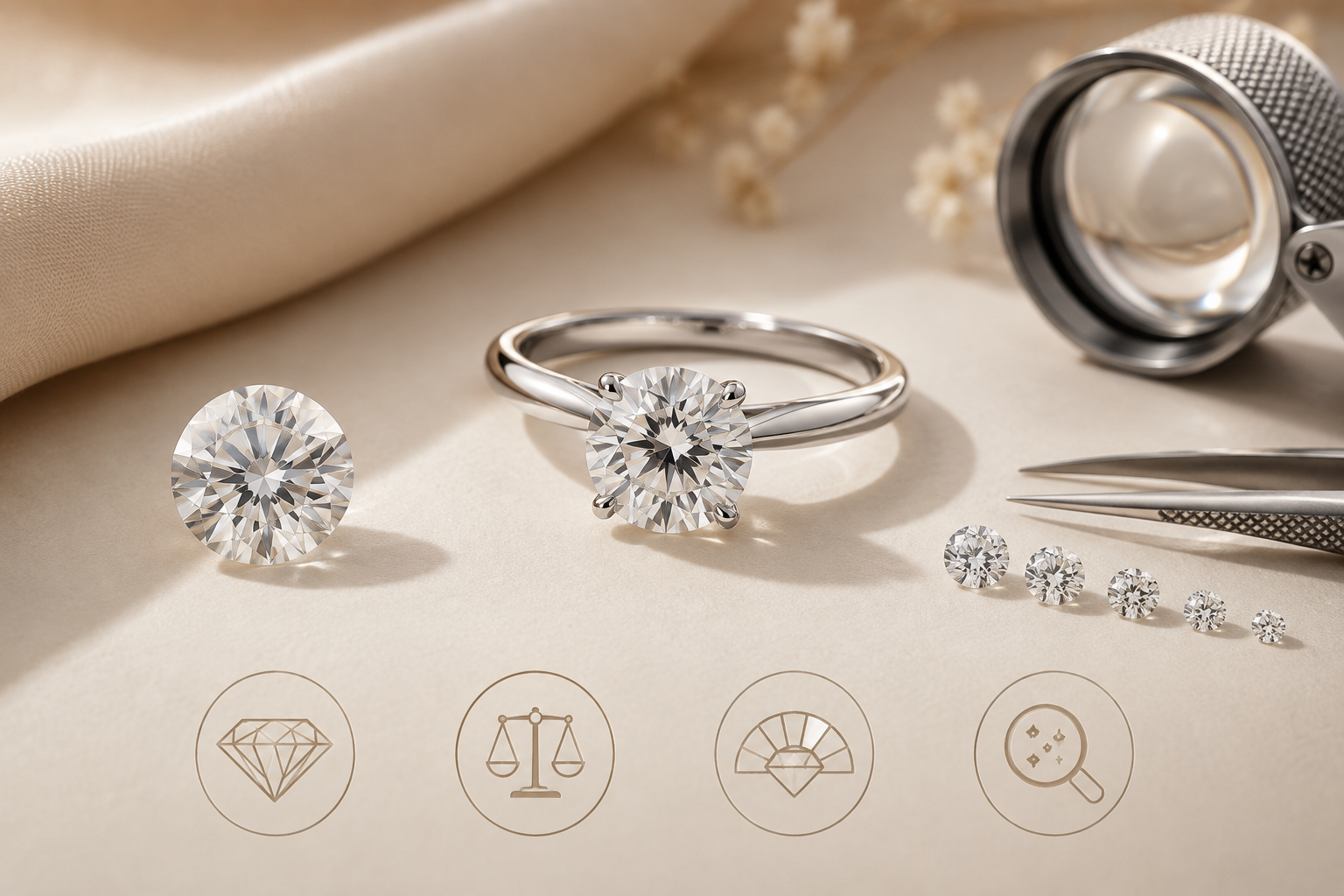
Should You Prioritize Cut, Carat, Colour or Clarity?
One of the most common questions people ask before buying a diamond is, "If I can only spend more on one thing, what should it be?" Some want the biggest diamond they can afford. Others don't want visible inclusions. Many wonder if paying more for a higher colour grade is actually worth it. The truth is, you can't maximise everything within a fixed budget, so understanding where your money makes the biggest difference is what matters most.
If you're looking for the shortest answer, prioritise cut first. A well-cut diamond reflects light better, giving it more sparkle and brilliance than a poorly cut diamond with a higher colour or clarity grade. Once you've chosen an excellent cut, you can balance carat, colour, and clarity based on your budget and what matters most to you.
That said, there isn't a single formula that works for everyone. Someone buying an engagement ring may prioritise size, while another buyer may care more about a colourless diamond. The right choice depends on your budget, your preferences, and how you want the diamond to look once it's set in jewellery.
In this guide, we'll break down what each of the 4Cs of diamond quality actually changes, when it's worth paying more for a higher grade, and how to prioritise cut, carat, colour, and clarity to get the best-looking diamond for your budget.
Cut, Carat, Colour or Clarity: Why the Right Balance Matters Most
If you've spoken to different jewellers or spent time researching online, you've probably come across conflicting advice.
One person says, "Always choose the biggest diamond you can afford." Another tells you to never compromise on colour. Some insist that clarity is the most important factor, while others say cut is the only thing that really matters.
So, who's right?
The truth is, they're all looking at the diamond from a different perspective.
A diamond's beauty isn't determined by a single characteristic. It's the result of how cut, carat, colour, and clarity work together. Focusing too much on one and ignoring the others can leave you with a diamond that looks less impressive than you expected, even if it has excellent grades on paper.
For example, choosing a larger carat weight while compromising heavily on cut may give you a bigger diamond, but it won't necessarily give you a brighter one. Similarly, paying a premium for a flawless clarity grade may not improve how the diamond looks once it's set in a ring.
That's why experienced buyers don't ask, "Which of the 4Cs is the most important?" Instead, they ask, "Which combination gives me the best-looking diamond within my budget?"
That's the approach we'll follow throughout this guide.
If You Can Prioritise Only One, Start with Cut
If you're buying a diamond for its beauty, cut is usually the first characteristic worth prioritising.
That's because cut determines how a diamond handles light. A well-cut diamond reflects and returns more light to your eyes, making it appear brighter, more brilliant, and full of sparkle. Even if two diamonds have the same carat weight, colour, and clarity, the one with the better cut will often look more lively.
This is also why many jewellers consider cut to have the biggest impact on a diamond's overall appearance. A poorly cut diamond can look dull, even if it has an excellent colour grade or very high clarity. On the other hand, an Excellent or Ideal Cut can make a diamond appear more vibrant and eye-catching without increasing its size.
That doesn't mean cut is the only thing that matters. Once you've chosen a well-cut diamond, the next step is deciding how to balance carat, colour, and clarity based on your budget and personal preferences.
Know More About Diamond Cuts
Think of it this way: Cut determines how much your diamond sparkles. The other characteristics influence its size, colour, and internal purity, but none of them can compensate for a diamond that doesn't reflect light well.
When Should You Prioritise Carat, Colour or Clarity Instead?
Although cut has the biggest influence on how a diamond sparkles, it isn't always the first priority for every buyer. The right choice depends on what you want your diamond to look like and what matters most to you.
If You Want a Bigger-Looking Diamond, Prioritise Carat
If your first reaction when looking at a diamond is, "I wish it looked a little bigger," then carat weight deserves more attention.
Carat measures how much a diamond weighs, and in most cases, a higher carat weight results in a larger-looking diamond. If making a visual impression is your priority, increasing the carat weight may have a greater impact than upgrading to a higher colour or clarity grade.
That said, don't sacrifice cut for size. A poorly cut 1-carat diamond can appear less lively than a smaller diamond with an excellent cut.
If You Love Bright White Diamonds, Prioritise Colour
Not everyone notices colour immediately, but some buyers do. If you prefer a diamond that looks bright, icy white, especially in a white gold or platinum setting, choosing a higher colour grade can make a noticeable difference.
On the other hand, if you're buying a ring in yellow or rose gold, many people are happy with slightly warmer colour grades because the metal naturally complements the diamond.
If You Want Exceptional Clarity, Prioritise Clarity
Clarity becomes more important when you're buying a larger solitaire diamond or simply want a diamond with as few inclusions as possible.
For most engagement rings and everyday jewellery, a well-selected VS1 or VS2 diamond is often eye-clean, meaning its inclusions aren't visible without magnification. However, buyers looking for premium clarity or larger diamonds may choose VVS or IF grades for their rarity and exceptionally clean appearance under magnification.
The Best Diamond Is One That Matches Your Priorities
Before comparing diamond grades, ask yourself one simple question:
What do I want to notice every time I look at my ring?
If your answer is:
- "I want it to sparkle." Start with cut.
- "I want it to look bigger." Focus on carat.
- "I want it to look bright and colourless." Prioritise colour.
- "I want the highest possible clarity." Give more importance to clarity.
Once you're clear about your priorities, choosing the right diamond becomes much easier because you're comparing options based on what matters to you, not just what has the highest grades.
Common Mistakes Buyers Make When Comparing the 4Cs
Choosing a diamond isn't about finding the highest grades. It's about finding the right balance. Over the years, many first-time buyers make the same mistakes, often because they're focused on a single specification instead of how the diamond looks as a whole.
Prioritising Carat Over Cut: A bigger diamond is exciting, but not if it lacks brilliance. Choosing a larger carat weight while compromising on cut can result in a diamond that appears dull and lifeless. If sparkle is important to you, a well-cut diamond will usually leave a stronger impression than simply choosing a larger one.
Paying for Grades You May Never Notice: Many buyers assume that the highest colour or clarity grade is always the best investment. In reality, the visible difference between two adjacent grades is often minimal, while the price difference can be significant. Before paying a premium, ask yourself whether that upgrade will actually change how the diamond looks in everyday wear.
Trying to Maximise All Four Cs: One of the biggest misconceptions is believing that every diamond should have the highest cut, largest carat, best colour, and highest clarity. In most cases, that simply isn't realistic within a fixed budget. The smartest buyers focus on achieving the best overall balance instead of chasing perfect grades across every category.
Ignoring the Ring Design: A diamond never exists on its own. The ring setting, metal colour, and overall design all influence how the diamond appears. A well-designed setting can make a diamond look larger, brighter, and more elegant, which is why it's important to consider the finished ring rather than the loose diamond alone.
Comparing Certificates Instead of Diamonds: Grading reports are important, but they don't tell the complete story. Two diamonds with identical grades can still look different because of variations in cut precision, proportions, and light performance. Whenever possible, evaluate the diamond itself instead of making a decision based only on the certificate.
Making the Most of Your Budget
Understanding the 4Cs helps you make informed decisions, but choosing the right diamond also depends on the options available within your budget. This is one reason many buyers today are considering lab-grown diamonds. Since they are graded using the same standards as natural diamonds, they often make it possible to choose a better combination of cut, carat, colour, and clarity without exceeding your budget.
At EMORI, every diamond is carefully selected for its overall beauty, not just its grading report. Our collection of IGI-certified lab-grown diamond jewellery is designed to help you achieve the best balance of quality, craftsmanship, and value, so you can choose a diamond you'll love wearing for years to come.
There's no single formula for choosing the perfect diamond because every buyer has different priorities. Some want a larger diamond, others value exceptional clarity, while many simply want the best-looking ring within their budget.
If you're unsure where to start, prioritise cut first, then balance carat, colour, and clarity based on what matters most to you. A well-balanced diamond often delivers more beauty and value than one with the highest grade in just a single category.
The goal isn't to buy the diamond with the best specifications on paper. It's to choose one that looks beautiful, fits your budget, and feels right every time you wear it.
If you're exploring lab-grown diamonds, this balance becomes even easier to achieve. Because they offer the same brilliance, durability, and grading standards as natural diamonds, many buyers are able to choose a better combination of the 4Cs without stretching their budget. Whether you're buying an engagement ring, a gift, or your first piece of fine jewellery, understanding how the 4Cs work together will help you make a confident decision.
Share:
Is VVS Worth the Extra Money, or Is VS1 Good Enough?
Why Are Lab Grown Diamonds So Much Cheaper Than Natural Diamonds?