

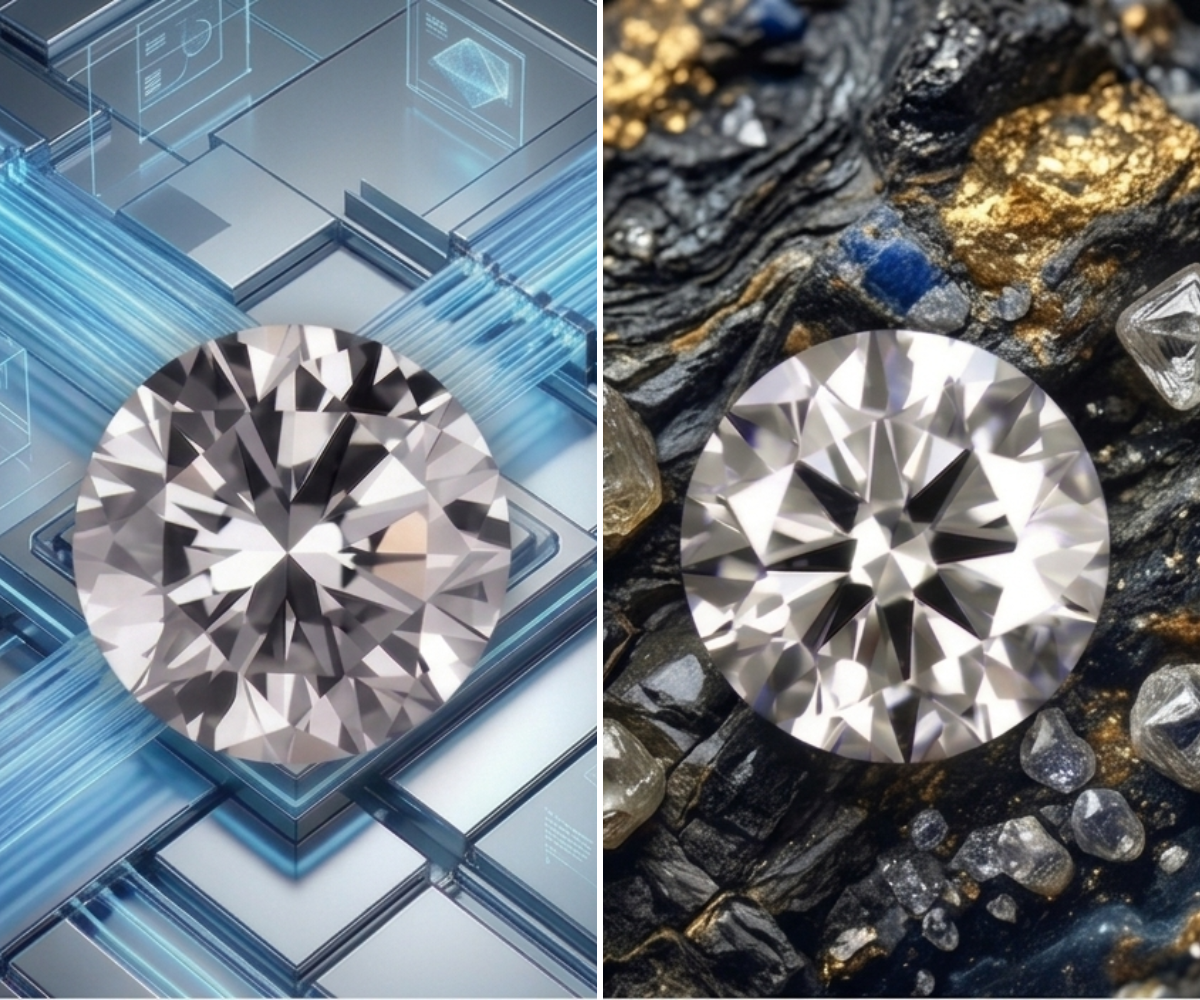
Lab grown diamonds are real diamonds, just like natural diamonds. The main difference lies in their origin. While lab grown diamonds are created in the labs over a few weeks time span, natural diamonds are formed deep beneath the Earth's surface over billions of years. Both natural and lab grown diamonds are carbon crystals formed under extreme heat and pressure, and share the same chemical, physical and optical properties.
Diamonds have always been associated with a status symbol, something that only the rich owned. But today, that definition is changing. With the growing popularity of lab grown diamonds, luxury has become more accessible. People now have a choice between natural and lab diamonds.
While both are real diamonds, understanding the difference between lab grown diamonds vs natural diamonds can help you choose the right option based on your preferences, budget and values. In this blog, find out key differences, how they’re made, why they cost less and which is better for you in 2026.
What are lab grown diamonds?
Lab grown diamonds are real diamonds made in the controlled environments of advanced laboratories that replicate the high heat and pressure found deep beneath Earth’s surface required to create natural diamonds.
They share the same chemical and physical composition and optical properties as natural diamonds and thus have the same durability and brilliance.
In fact, just like natural diamonds, they are even graded based on the 4Cs of a diamond (Cut, Colour, Clarity, Carat).
While sharing the same qualities, they cost significantly cheaper than natural diamonds. Due to this reason, the demand for lab grown diamond jewellery is increasing by the day.
How are lab grown diamonds made?
Lab grown diamonds are created in the labs. The controlled environment helps avoid the flaws that are present in the natural diamonds. There are two main procedures of creating lab grown diamonds:
-
Chemical Vapor Deposition (CVD):
In this process, a diamond seed is placed in a vacuum chamber filled with carbon-rich gases like methane. The gas is then heated to form plasma, which allows carbon to collect onto the seed, growing it layer by layer in 2 to 4 weeks.
-
High Pressure High Temperature (HPHT):
In this process, the natural conditions required to form a diamond are replicated in the laboratories, to grow the diamond seeds gradually. This process takes about 7 to 10 days for smaller diamonds and 2 to 3 weeks for larger ones.
What are natural diamonds?
Natural or earth mined diamonds are rare, valuable and expensive gemstones. It takes billions of years to form a natural diamond under extreme heat and pressure deep beneath the earth’s mantle. Due to their rarity and mining costs, they are usually priced higher.
Difference between Lab Grown Diamonds and Natural Diamonds
Let's take a look at the differences between lab grown diamonds and natural diamonds.
|
BASIS |
LAB GROWN DIAMONDS |
NATURAL DIAMONDS |
|---|---|---|
|
Origin |
Lab grown diamonds are made in the labs using advanced technologies like CVD and HPHT. |
Natural diamonds form deep beneath the Earth’s crust under extreme conditions, over billions of years. |
|
Cost |
These diamonds cost 30-40% of natural diamonds while offering the same quality. |
These diamonds are priced higher due to rarity and high mining and overhead costs. |
|
Rarity |
Lab diamonds are made on demand, hence they are not as rare. |
Mined diamonds take billions of years to form, and thus are very rare, especially the ones with high quality. |
|
Resale |
Since they are not rare, they do not have a very high resale. Many lab diamond jewellery brands offer 100% buyback on their jewelleries. |
Since these diamonds are limited, they offer a higher resale value as compared to natural diamonds. |
|
Purity |
These are mostly Type IIa diamonds, which is the purest form, resulting in colourless transparency or light pink tint. |
95% of natural diamonds are Type Ia and might contain impurities causing a yellow or brown tint. |
|
Inclusions |
Since these diamonds are created under controlled diamonds, there are fewer inclusions. |
Since these diamonds are formed naturally, they have higher inclusions and blemishes. |
|
Sustainability & Ethics |
Lab created diamonds are more sustainable and ethical as they do not do as much damage to earth or risk the lives of miners. |
Mining natural diamonds causes damages to the Earth like deforestation, water pollution and in fact community displacement. |
Are lab grown diamonds real?
It is scientifically proven that lab grown diamonds are real diamonds with the same chemical, physical and optical properties as natural diamonds. They have the same hardness (10 on the Mohs scale), durability, brilliance and fire.
Lab grown diamonds are not moissanite or cubic zirconia, which are duplicates of natural diamonds.
The question of authenticity often comes from the difference in price points, which has nothing to do with the quality or authenticity, but in fact with the rarity factor and overhead costs.
Lab Grown Diamonds vs Natural Diamonds: Which is better for you?
Whether lab grown diamonds or natural diamonds are better for you depends totally on what is more important for you.
If you want a bigger stone with better quality and brilliance at an affordable price or sustainable and ethical options, choose lab grown diamonds.
But if you prefer a rare gemstone or it holds a traditional significance, natural diamonds are the right pick for you.
FAQs
-
Are lab diamonds as good as real diamonds?
Lab grown diamonds are real diamonds with the same chemical, physical and optical properties as natural diamonds and have the same brilliance and durability.
-
What are the disadvantages of lab-grown diamonds?
Lab grown diamonds do not have any disadvantages. They cost significantly lower than natural diamonds while offering the best quality. They are sustainable and ethically sourced.
-
Are lab grown diamonds cheaper?
Yes, lab grown diamonds cost 30-40% less than natural diamonds as they avoid mining and overhead charges and rarity costs.
-
Is lab grown diamond worth buying?
Yes, lab grown diamonds are a great choice for affordable luxury as they cost significantly lower than natural diamonds.
-
What is the resale value of lab grown diamonds?
Many lab grown jewellery brands like Emori offer 80-100% buy back value on their lab diamond jewellery.
Share:
What are the 4Cs in Diamond Quality?
Know About Types of Diamond Cuts