

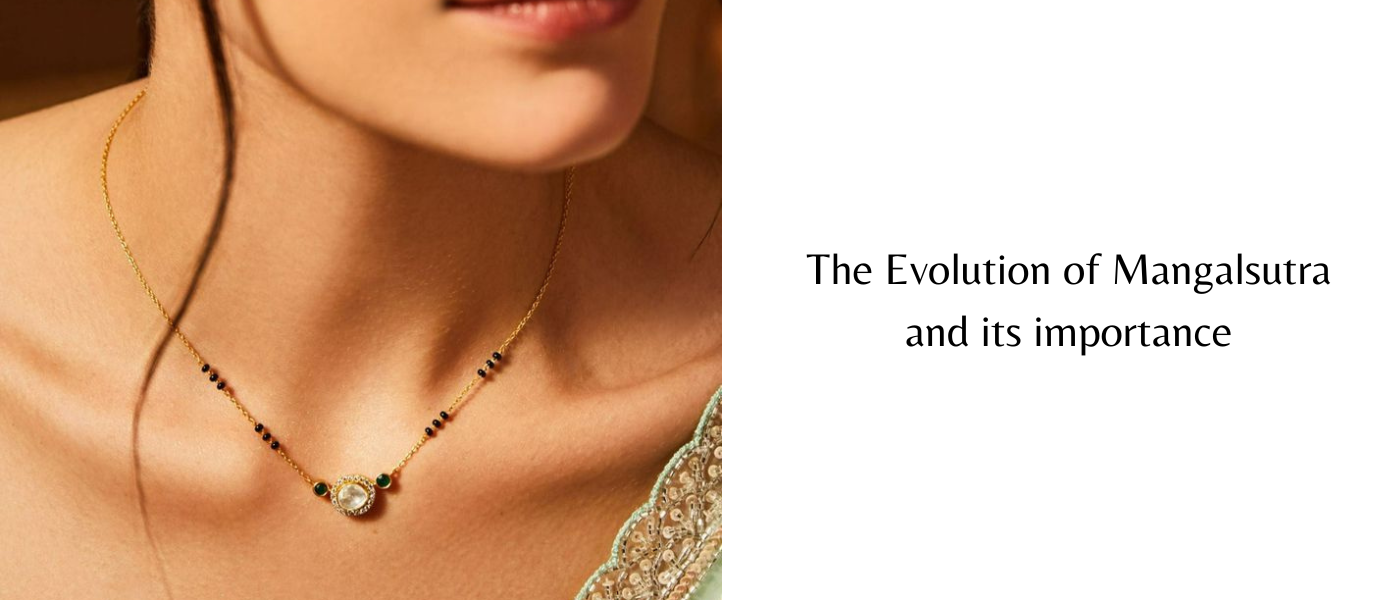
For ages we’ve seen married Indian women tie a mangalsutra (also known as tanmanya), around their necks, which states their marital status and commitment to their husband. Wearing a mangalsutra has been an integral part of Hindu traditions for ages, but do you know its history dates back to the Vedic Period? This tradition is followed not only in India but also in Nepal and Sri Lanka.
Unlike in the West, where the union of a couple is symbolized by engagement rings and wedding bands, the practice of tying this sacred thread around the bride’s neck by the groom during the wedding ceremony has its roots in the southern part of India.
Significance of mangalsutra
Wearing a mangalsutra signifies eternal commitment and acts as a reminder of the marriage vows and bond shared between a husband and wife. However, its significance varies across different cultures in India.
Apart from the symbol of marital status, it is believed that wearing a mangalsutra protects the couple from the evil eye and wards off all the misfortunes and negativities. It is also believed to enhance their well-being and ensure the prosperity and long life of the husband.
In different regions of the country, mangalsutra have different names with different design motif styles, to name a few, here are some examples-
In Maharashtra, it is known as Vati which has two round shaped motifs in the centre.

In Kashmir, it is known as Dejhoor which is worn in the ear cartilage.

In Tamil Nadu, it is known as Thaali which has multiple motifs, to name a few like tulsi plant, Lord Shiva and Goddess Meenakshi further beautified by diamonds, gold coins and black beads.

In Kerela, it is known as Minnu which is in the shape of a leaf.

In Karnataka, it is known as Karthamani Pathak which consists of a gold chain and gold beads paired with red corals. The traditional pendant usually features an image of Goddess Lakshmi engraved on the gold coin.

Evolution of Mangalsutra
Over the centuries, the mangalsutra has gone through drastic transformations, from evolving designs to adapting to the blend of cultures and fashion trends while maintaining its deep-rooted significance.
In its earliest form, a mangalsutra was merely a yellow thread which periodically evolved with the combination of black beads. The yellow thread was gradually replaced by gold along with a full line of black beads.
Over the years, the opinions of the consumers have broadened and a perceptible shift in cultural expectations has been seen. With the rise of the modern era, today’s women have embraced their individuality and they decide how they want to adorn themselves with this symbol of marriage and commitment.
Evolving from Tradition to Trend
Today’s modern design requirements have been shifted towards the minimalist approach. Lightweight design, fancy/dainty motifs combined with diamonds and fewer black beads have been observed in the trend for quite some time.
Moreover, apart from the traditional or lightweight necklace designs, the product categories for mangalsutra have also evolved. What once was only worn around the neck of a married woman can now also be seen in categories of earrings, rings, pendants and bracelets.
Lab Grown Diamond Mangalsutra designs

Lab Grown Diamond Mangalsutra Designs with diamond-studded one, two and three circles with halo, single solitaire, solitaire with halo, diamond infinity, diamond infinity with drop, alphabetical motifs, simple floral-studded patterns have been quite popular lately throughout all mangalsutra categories.
A set of one, two, three, four and five black beads on each side or a repetition of similar sets with a gap has become a current trend in mangalsutra chains or necklaces.
Yellow gold and rose gold are the two most common metals being used for mangalsutra. The length of the mangalsutra necklaces varies between 16 inches to 18 inches depending upon the comfort and preference of the customer
It is extremely incredible to see how the lab grown diamond mangalsutra design and cultural evolution of mangalsutra have developed over time but among all these changes, its meaning and deep-rooted significance remain constant.
Share:
How is Plating and Rhodium plating done on Diamond jewellery and why is it Importan
How Diamond jewellery is made using 3D software - All about CAD designing