

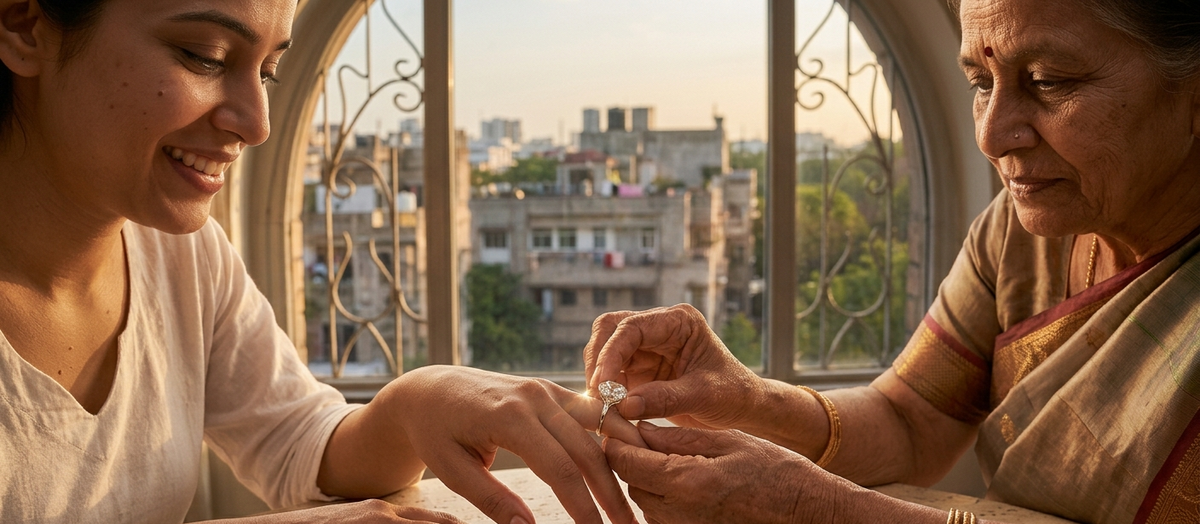
When buying a diamond, most people want something that will last for years. Lab-grown diamonds have become a popular choice because they offer the same basic diamond properties as natural diamonds. But one question often comes up: How long do lab-grown diamonds last?
The answer is that a lab-grown diamond can last for generations with proper care. It does not have a shorter lifespan because it was created in a laboratory. Lab-grown and natural diamonds have essentially the same chemical composition, crystal structure, and physical properties. The main difference is their origin.
What Are Lab-Grown Diamonds?
Lab-grown diamonds are real diamonds created using advanced technology. Instead of forming deep inside the Earth over a long period, they are grown in a controlled laboratory environment.
Two common methods are Chemical Vapour Deposition (CVD) and High Pressure High Temperature (HPHT). These methods recreate conditions that allow carbon to form a diamond crystal.
The result is a diamond with the same chemical and physical properties as a natural diamond. It is not the same as diamond simulants such as cubic zirconia or moissanite.
How Long Do Lab-Grown Diamonds Last?
A well-maintained lab-grown diamond can last for a lifetime and be passed down to future generations. There is no fixed expiry date for a diamond. It does not slowly wear away because it gets older. Its laboratory origin does not make it less durable.
However, it is important to separate the diamond from the jewellery setting. The diamond can remain intact for generations. The metal setting, clasps, or other parts of the jewellery can experience wear over time. These parts may eventually need repair or replacement.
For example, a lab-grown diamond engagement ring could be worn for many years. If the setting becomes worn after decades, the diamond can be placed into a new setting and continue to be enjoyed.
Are Lab-Grown Diamonds as Durable as Natural Diamonds?
Yes. Lab-grown diamonds and natural diamonds have the same hardness. Both rank 10 on the Mohs hardness scale, which is the highest rating on this scale. This makes diamonds highly resistant to everyday scratches and surface wear.
This means a lab-grown diamond is suitable for many types of everyday jewellery. It can be worn regularly without losing its basic hardness simply because it was created in a laboratory.
However, hardness does not mean that a diamond cannot be damaged.
Lab-Grown vs. Natural Diamonds: Which Lasts Longer?
When it comes to lifespan, there is no meaningful difference based on origin. Both types can become long-lasting pieces of jewellery. The main difference is how they are formed.
This means you do not need to choose a natural diamond because you believe it will physically last longer. The diamond's origin does not determine its basic lifespan.
|
Feature |
Lab-Grown Diamond |
Natural Diamond |
|
Material |
Diamond |
Diamond |
|
Hardness |
10 on the Mohs scale |
10 on the Mohs scale |
|
Scratch resistance |
Very high |
Very high |
|
Everyday use |
Yes, with a secure setting |
Yes, with a secure setting |
|
Lifespan |
Generations with proper care |
Generations with proper care |
|
Origin |
Laboratory |
Natural geological formation |
Do Lab-Grown Diamonds Lose Their Sparkle?
No. Lab-grown diamonds do not naturally become dull or cloudy simply because they get older.
What can change is the appearance of the surface. Daily wear can expose jewellery to skin oils, dust, lotion, soap, and other residue. These substances can build up on the diamond and reduce the amount of light entering and leaving the stone. As a result, the diamond may look less bright.
This does not mean the diamond is becoming weaker or losing its original properties. Regular cleaning can remove this buildup and help restore its visible sparkle.
What Can Affect the Life of a Lab-Grown Diamond?
The diamond itself is highly durable, but several factors can affect the condition of your jewellery.
Diamond Cut and Shape
The way a diamond is cut can affect how well certain areas are protected. Some shapes have pointed or exposed edges that may need extra protection. Emori’s lab-grown diamond collection features modern designs made for everyday wear. A well-designed setting can help reduce the risk of accidental damage.
Jewellery Setting
The setting holds the diamond in place. Loose or worn prongs can increase the risk of the stone becoming loose or falling out. This is why the setting deserves as much attention as the diamond itself.
Daily Activities
Wearing a diamond ring during normal activities is generally fine. However, activities involving heavy impact can increase the risk of damage. It is better to remove your ring before activities such as weightlifting, contact sports, gardening, and heavy household work. Taking off the ring for these activities can help protect both the diamond and its setting.
Conclusion
Lab-grown diamonds can last for generations with proper care. Their laboratory origin does not give them a shorter lifespan than natural diamonds. The diamond itself is only one part of the equation. The quality of the cut, the shape, the jewellery setting, everyday use, and regular maintenance can all affect how well the finished piece holds up over time.
If you want a diamond for everyday wear or a piece that can become a family heirloom, focus on more than the stone. Choose a secure setting, protect the jewellery from heavy impacts, clean it regularly, and have it professionally checked when needed. A lab-grown diamond can remain a beautiful part of your story for many years and generations to come with the right care.
Share:
Nine Nights, Nine Looks: How to Style Lab-Grown Diamond Jewellery for Every Night of Navratri
The Complete Guide to Lab-Grown Diamonds