

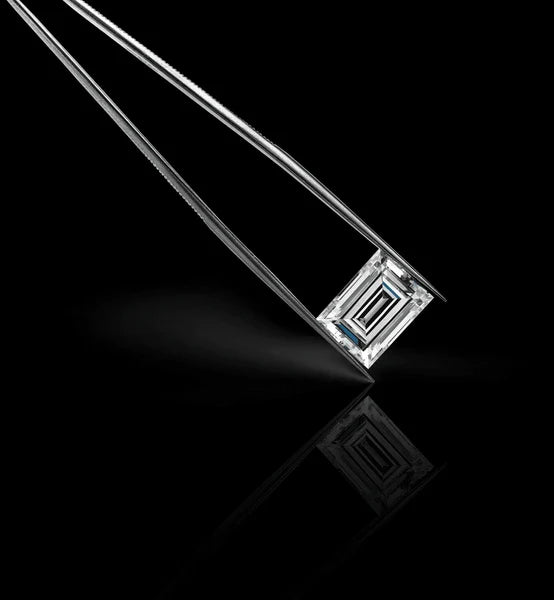
Baguette cut diamonds are one of the most distinctive and timeless diamond shapes. Known for their clean lines, rectangular form, and step-cut facets, they offer a sleek and understated look that is quite different from the sparkle of round or princess cuts. While baguettes may not be the first diamond shape people think of, they play an important role in fine jewellery, often enhancing other stones or bringing a modern, architectural beauty when worn on their own.
This guide will help you understand everything about baguette cut diamonds, from their history and features to their uses, pros and cons, and what to keep in mind when buying one.
What is a Baguette Cut Diamond?
The baguette cut diamond is a step-cut shape, usually rectangular but sometimes slightly tapered. It typically has 14 facets, fewer than most other cuts, which gives it a subtle glow rather than a fiery brilliance. Instead of sparkling with flashes of light, it reflects light in broad, mirror-like flashes. This is why baguette diamonds are often described as elegant, minimal, and modern.
The History of the Baguette Cut
The baguette cut originated during the Art Deco period of the 1920s and 1930s, a time when geometric designs, clean lines, and symmetry were highly celebrated. The name “baguette” comes from the French word for “long rod” or “stick,” reflecting its slender rectangular appearance. Ever since then, it has remained a favorite in both vintage-inspired and contemporary jewellery designs.
Key Features of Baguette Cut Diamonds
- Shape: Rectangular with straight or tapered edges.
- Facets: Typically 14, arranged in a step-cut style.
- Look: Sleek, clean, and glass-like reflections instead of fiery sparkle.
- Carat Distribution: Appears larger than some cuts of the same carat weight due to its elongated surface area.
- Clarity: Since baguette cuts have fewer facets, inclusions or flaws are more noticeable, making clarity an important factor.
Types of Baguette Diamonds
Straight Baguette
The straight baguette is the most classic form of this cut. It is perfectly rectangular, with parallel sides and sharp corners. Because of its geometric precision, it is often used in settings where symmetry and balance are important. Straight baguettes are very popular as side stones in engagement rings, where they sit neatly alongside a center diamond, giving the ring a structured and polished look. They are also a favorite choice for eternity bands, since their even shape allows them to line up seamlessly around the finger, creating a smooth and continuous stream of sparkle. This cut is ideal for someone who values clean design and timeless appeal.
Tapered Baguette
The tapered baguette is slightly different in shape, with one end narrower than the other, creating a gentle trapezoid outline. This subtle taper gives the stone a sense of movement and flow, which makes it especially beautiful when placed on either side of a center diamond. The narrowing shape draws the eye inward, guiding attention directly to the main stone while adding a graceful transition to the overall design. Tapered baguettes are often seen in three-stone engagement rings, where they complement the center diamond without overpowering it. They are perfect for those who want a ring that feels both classic and elegant, with a hint of artistry in the details.
Baguette Diamonds in Jewellery
One of the reasons baguette cut diamonds remain so popular is their incredible versatility. Their sleek and geometric look allows them to fit beautifully into different types of jewellery, whether they are supporting a center stone or creating a design of their own.
Engagement Rings
Baguette diamonds are often chosen as side stones in engagement rings, especially next to round, oval, or emerald-cut diamonds. Their clean, rectangular form frames the center stone in a way that enhances its brilliance without taking away attention. Many couples love how baguettes bring balance and symmetry to the ring, making the design feel complete. A tapered baguette on each side of the center stone, for example, creates a graceful flow that draws the eye naturally toward the main diamond
Eternity Bands
When placed in a row, straight baguette diamonds create an uninterrupted stream of sparkle around the finger. Unlike brilliant cuts that give off bursts of fire, baguettes reflect light in sleek flashes, giving eternity bands a refined and elegant look. This style is especially loved by those who want something timeless yet modern, as the step-cut facets of baguettes make the band appear smooth and polished. Eternity bands with baguette diamonds also stack beautifully with engagement rings, making them a meaningful choice for weddings or anniversaries.
Bracelets and Necklaces
In line bracelets, baguette diamonds add a contemporary, structured beauty. Their rectangular shape sits flush against each other, creating a seamless flow of sparkle across the wrist. The same effect works wonderfully in pendants and necklaces, where baguettes can be arranged either in a single line or in geometric patterns to form striking statement pieces. The clean look of baguettes makes them versatile enough for everyday wear while also being bold enough to stand out at special occasions.
Solitaire Rings
Although less common, baguette diamonds as solitaires have a unique appeal. A single baguette set on a simple band creates a ring that feels fresh, minimal, and stylish. It is a choice for someone who loves modern designs and prefers a ring that stands apart from traditional solitaires. Because of its elongated form, a baguette solitaire also makes the finger appear longer and slimmer, which many people find flattering.
Pros of Baguette Cut Diamonds
- Sleek and modern appearance.
- Great as accent stones for larger diamonds.
- Often more affordable per carat compared to brilliant cuts.
- Elongated shape makes fingers look slender.
Cons of Baguette Cut Diamonds
- Less brilliance compared to round or princess cuts.
- Inclusions and flaws are more visible, so higher clarity is recommended.
- Can be fragile at the corners if not set securely.
What to Look for When Buying a Baguette Cut Diamond
- Clarity: Go for higher clarity grades, as inclusions show easily.
- Color: Choose a near-colorless grade or better, especially if paired with a bright center stone.
- Cut: Precision in the cut is crucial for symmetry and light reflection.
- Setting: Make sure the stone is set securely since the corners are prone to chipping.
Who Should Choose a Baguette Diamond?
Baguette cut diamonds are perfect for those who prefer understated beauty over maximum sparkle. If you appreciate clean lines, symmetry, and a vintage-meets-modern aesthetic, a baguette diamond could be the right choice. They also work wonderfully for couples looking for unique engagement ring designs or timeless wedding bands.
Final Thoughts
Baguette cut diamonds may not shine as brightly as other cuts, but they carry a different kind of charm. With their streamlined look and classic Art Deco appeal, they bring uniqueness to any piece of jewellery. Whether used as side stones or as the star of the design, baguette diamonds prove that simplicity can make the strongest impression.
If you are looking for jewellery that combines timeless style with a modern touch, baguette cut diamonds are an excellent choice. Their versatile nature allows them to enhance engagement rings, wedding bands, bracelets, or pendants beautifully. A baguette diamond is not just a stone but a symbol of quiet confidence, making it perfect for those who appreciate understated luxury.
At Emori, we craft ethically made lab grown diamond jewellery, including designs featuring baguette cut diamonds. Our pieces bring together precision, beauty, and sustainability, offering you jewellery that is both meaningful and modern. Explore our baguette cut lab grown diamond jewellery to find a style that reflects your personality and story.
Share:
Custom vs. Ready-Made Diamond Engagement Rings
Complete Guide to Buying Lab Grown Diamonds in India