

Why Diamond Clarity Is So Important
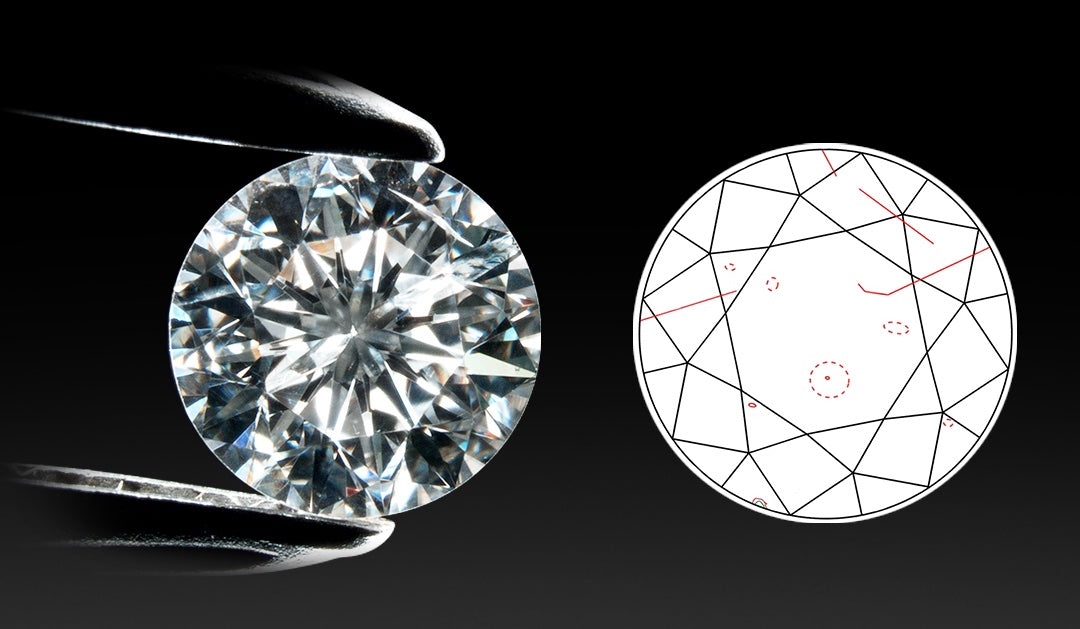
Diamond clarity can sound complicated, but the basic idea is simple. Clarity describes a diamond's internal and surface characteristics and how visible they are. These characteristics are called inclusions and blemishes.
A diamond with fewer visible characteristics receives a higher clarity grade. However, a higher grade does not always mean a diamond will look better to the naked eye. The right clarity depends on the diamond’s size, cut, shape, inclusion location, and what you personally value.
The Diamond Clarity Scale
The GIA clarity scale has 11 grades, from Flawless (FL) to Included (I3). The GIA grades diamond clarity under 10x magnification.
The scale does not mean that every diamond in one grade looks the same. Two diamonds with the same clarity grade can have different types, sizes, and locations of inclusions.
|
Clarity Grade |
Explanation |
What This Means |
|
FL |
No inclusions or blemishes visible at 10× |
Extremely rare |
|
IF |
No inclusions, only blemishes visible at 10× |
Very high clarity and rarity |
|
VVS1/VVS2 |
Very tiny inclusions that are difficult to see at 10× |
Excellent clarity |
|
VS1/VS2 |
Minor inclusions visible with effort at 10× |
Often a good balance of appearance and value |
|
SI1/SI2 |
Inclusions are easier to see at 10× |
Some can still look clean to the naked eye |
|
I1/I2/I3 |
Inclusions are obvious at 10× and may be visible without magnification |
Can affect appearance and, in some cases, durability |
Inclusions vs Blemishes: What Is the Difference?
Inclusions are characteristics found inside a diamond. They can include crystals, clouds, and pinpoints.
Blemishes are characteristics on the diamond’s surface, such as scratches or polish lines.
Where these characteristics appear matters. For example, an inclusion near the edge may be harder to notice than one directly under the table, or the large central area of a faceted diamond.
What Is an Eye-Clean Diamond?
You may come across the term ‘eye-clean’ when shopping for diamonds. It generally means that inclusions cannot be seen with the naked eye under normal viewing conditions. It is an industry term, not an official GIA grade.
This is important because a diamond does not need to be FL or VVS to look clear when you wear it. A VS or SI diamond may have inclusions that are visible under magnification but difficult to see without it.

What Influences Diamond Clarity?
-
Diamond Size: Certain inclusions may become easier to see as the stone gets larger.
-
Diamond Shape: Some shapes can show inclusions more clearly than others. Step-cut shapes, such as emerald cuts, have large open facets that can make inclusions easier to notice.
-
Inclusion Location: An inclusion in the centre of the stone may attract more attention than one closer to the edge.
-
Cut Quality: A well-cut diamond can show strong sparkle. This can help hide small inclusions
-
Diamond Colour: The colour and contrast of an inclusion can affect how easily you notice it.
-
Viewing Distance: A characteristic that is easy to see under 10× magnification may not be visible when you look at the diamond normally.
When Is a Higher Clarity Grade Worth It?
The best choice depends on your budget and what matters most to you.
If you are buying a larger diamond or a step-cut shape such as an emerald or Asscher cut, a higher clarity grade may be worth considering. These diamonds can make inclusions easier to notice because of their larger surface area and open facets.
If rarity is important to you, FL, IF, and VVS diamonds are among the rarest grades. However, a better clarity grade does not always mean a diamond will look noticeably better.
If you are looking for the best balance of appearance and value, VS diamonds are popular. An SI diamond can look just as clear while leaving more budget for carat, cut, or colour.
The goal isn't to choose the highest clarity grade. It's to find a diamond that looks beautiful to your eye and suits your style.
Find the Diamond That Feels Right
Diamond clarity is just one part of choosing the right diamond. With Emori, you can choose from carefully selected lab-grown diamonds in modern designs that fit into your everyday life. Explore your options and choose a diamond that feels perfect for you.
Your personal style and lifestyle also help determine the right diamond.
-
Smaller hands: Oval, pear, marquise, and emerald cuts can make fingers look longer.
-
Oval face: Round and cushion shapes can add softness to your features.
-
Round face: Oval, pear, and marquise shapes can create a more elongated look.
-
Classic style: Round brilliant diamonds offer timeless sparkle.
-
Modern style: Oval, emerald, pear, and radiant cuts create a unique look.
-
Everyday wear: An eye-clean diamond offers beauty and value without paying for features you may never notice.
-
Statement pieces: Larger diamonds may benefit from closer attention to clarity and inclusion placement.
Share:
Do Diamonds Lose Sparkle Over Time?
How much carat diamond is good for daily wear?