

The Role of Engagement Rings in a Couple's Life ?
An engagement ring isn’t just jewellery, it’s a promise. A Lifetime of love, commitment and a shared future. Engagement Ring marks one of the most meaningful moments in a couple’s journey, reminding them every day of the bond they’ve chosen to build together. An engagement ring is more than its sparkle, it’s the emotion behind it that makes it truly priceless.
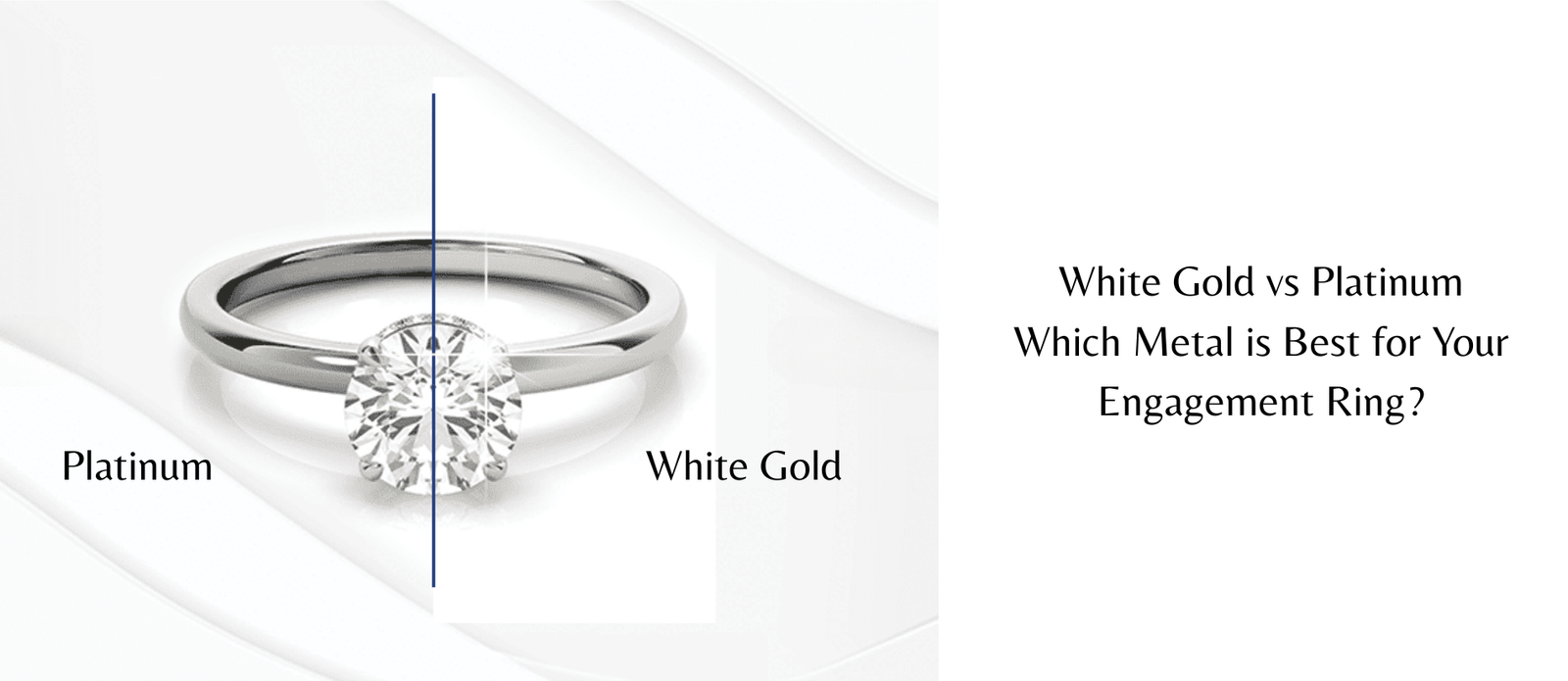
Difference Between White Gold and Platinum ?
| Feature | White Gold | Platinum |
| Composition | Gold mixed with white metals rhodium coating | 95% pure platinum |
| Color | Bright white (requires re-coating over time) | Naturally white (develops soft patina) |
| Durability | Strong, may need rhodium re-plating | Extremely durable, maintains volume |
| Maintenance | Needs re- coating every few years | Low maintenance, no plating required |
| Weight | Lightweight | Heavier and denser |
| Feel | Light and comfortable | Substantial and premium feel |
| Hypoallergenic | Not always (may contain nickel) | Yes, ideal for sensitive skin |
| Price | More affordable upfront | More expensive due to purity and weight |
| Ideal For | Stylish, budget-conscious buyers | Long-term wear and premium quality seekers |
What's the best metal for engagement rings ?
While choosing your engagement ring, there are various metal options you can choose from. Each metal represents a different style and look.
- 18-karat yellow gold: this metal is made with 75% pure gold and 25% other metals while being the perfect mix of strength and malleability. This metal adds a royal touch to your diamond ring.
- 18-karat rose gold: this romantic color of metal is made with 75% pure gold and 25% alloy of copper. Offering a pinkish color that compliments your skin tone, adding a soft touch to your look.
- 18-karat white gold: This metal is made with 75% pure gold mixed with other white metals; this metal alloy turns into a warm grey color, so this requires a layer of rhodium plating for the white shine.
- Platinum: Platinum is the go-to option when choosing white metal for your engagement ring; platinum adds a unique shine and elegance to your white diamond. Additionally, this metal does not require any mixing with other metals, offering pure quality and strength.
- Two-tone metal: You can also combine two different metals to add a different touch to your engagement ring. Two-tone metals add a quirky and versatile touch to your ring that matches all styles.
The process of making white gold
- Gold is naturally a yellow metal, so to achieve a bright white look, it has to be alloyed with other metals.
- Most engagement rings are made with palladium white gold, which can result in a greyish color, keeping the slight traces of yellow gold.
- Nickel and other cheap metals are also used in some cases to alloy the gold, which can result in skin allergies.
- Alloying the gold is not enough to achieve the bright white color. The metal is coated with rhodium plating.
Maintenance of white gold
- White gold requires long-term maintenance.
- As the rhodium plating can come off within a year or two, the white gold needs to be replated.
Benefits of opting for platinum
- Platinum is naturally a white metal.
- The platinum does not require any plating, so it is easy to maintain.
- The platinum only requires occasional polishing.
- This metal is also friendly for people with sensitive skin and other skin concerns.
- Platinum survives the wear and tear for a longer period than white gold.
Why Platinum Offers Better Value Than White Gold for Engagement ring
The price difference between white gold and platinum is minimal. Within the same price range, platinum offers more pure quality than white gold, and along with hassle-free maintenance, platinum is definitely the ideal choice for engagement rings.
Share:
How Diamond jewellery is made using 3D software - All about CAD designing
How to Clean Lab-Grown Diamond Jewellery at Home