

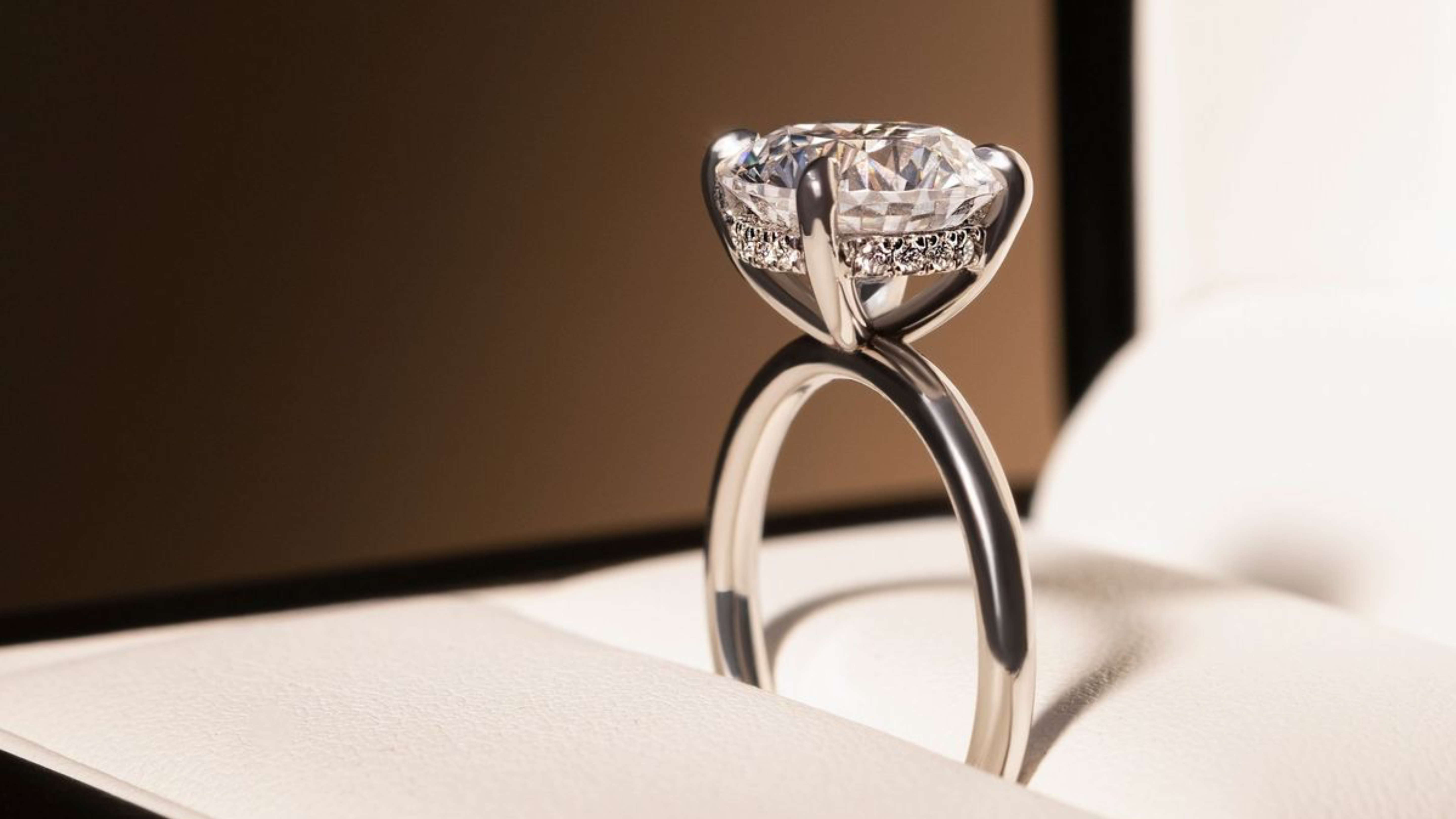
A solitaire diamond ring is the most exposed form of fine jewellery. There are no halo diamonds to create extra sparkle. No side stones to add visual distraction. No heavy design elements to compensate for weaknesses.
In a solitaire, the centre diamond carries everything.
Because of this, the quality standards for a true high grade solitaire are much stricter than most buyers realise. A ring may look bright under showroom lighting, but long term beauty depends on precision, structure, and material integrity.
Here is what genuinely defines a high quality solitaire diamond ring from a professional perspective.
1. Cut Precision
When evaluating a solitaire, the first and most important factor is cut precision.
Many buyers misunderstand cut as simply the shape, such as round, oval, or princess. In reality, cut refers to proportions, facet alignment, crown height, pavilion depth, table percentage, and symmetry.
A high quality solitaire diamond should:
• Have an Excellent or Ideal cut grade
• Show strong light return, not leakage
• Display balanced fire and brilliance
• Maintain proper depth percentage
For example, in a round brilliant diamond, a depth of approximately 59 -- 62.5 percent and a table of 54–57 percent generally supports optimal light performance.
Poorly proportioned diamonds leak light through the bottom or sides. Under natural daylight, they look flat instead of lively. In a solitaire setting, this flaw becomes obvious because there are no supporting stones.
Advanced buyers even look for Hearts and Arrows symmetry in round diamonds, which indicates superior facet precision.
Cut quality determines how the diamond performs in real life, not just under spotlights.
2. Clarity That Maintains Structural Integrity
Clarity is not just about visual cleanliness. It also affects durability.
A high quality solitaire diamond should be eye clean, meaning no visible inclusions from the top view. However, professional evaluation goes deeper than that.
Important considerations include:
• Location of inclusions
• Type of inclusion
• Size and density
• Whether inclusions reach the surface
Inclusions located directly under the table are more visible than those near the girdle. Feathers that reach the surface may affect durability if positioned in vulnerable areas.
For solitaire rings, VS1 or VS2 clarity is often the most balanced choice. VVS grades offer higher purity, but beyond a certain level, the difference is microscopic rather than visual.
The key is selecting a diamond that appears clean while maintaining structural safet
3. Colour Selection Based on Metal Pairing
In solitaire rings, colour sensitivity is more noticeable than in multi stone designs.
Diamonds graded D to F are considered colourless. G to H fall into near colourless and still appear white in most lighting.
However, metal choice significantly influences colour perception.
In platinum or white gold:
• Lower colour grades may show slight warmth
• D to G grades maintain crisp whiteness
In yellow gold:
• Slight warmth blends naturally
• G or H can look just as bright
For buyers prioritising icy appearance, staying within D to G is ideal. But intelligent colour selection also depends on budget balance and setting choice.
A knowledgeable approach evaluates colour under neutral lighting, not just store LEDs.
4. Proportional Spread and Face Up Size
Carat weight is often misunderstood.
Two diamonds with identical carat weight can look noticeably different in size due to cut proportions.
A diamond that is too deep carries excess weight in the pavilion, making it appear smaller from the top. A shallow diamond may look wide but sacrifice brilliance.
High quality solitaires maintain:
• Balanced depth
• Proper crown height
• Strong face up spread
• No visual windowing
Professional jewellers evaluate millimetre measurements, not just carat number.
A well cut 1.00 carat round diamond typically measures around 6.4 to 6.5 mm. If the measurement is significantly smaller, proportions may be off.
In solitaire rings, face up presence matters more than numeric weight.
5. Structural Engineering of the Setting
The setting in a solitaire ring is a structural support system, not just decoration.
A poorly engineered setting can compromise even a high grade diamond.
Important structural elements include:
• Prong thickness and symmetry
• Proper seat cutting for the diamond
• Secure grip without excessive pressure
• Balanced head alignment
Prongs must be evenly shaped and tightly positioned without covering too much of the diamond.
In cathedral settings, shoulder support adds strength. In low profile settings, stability improves daily wear practicality.
A high quality solitaire will feel stable when touched. There should be no movement or rattling of the diamond.
Craftsmanship becomes visible in polish quality, seamless solder joints, and consistent metal thickness.
6. Metal Density and Longevity
Solitaire rings are worn daily, often for decades.
High quality rings are crafted in 18K gold or platinum with sufficient metal density.
Lightweight bands may feel comfortable initially but can bend over time. When the band distorts, prongs loosen and diamond security weakens.
Platinum offers superior strength and develops a natural patina rather than losing metal over time. 18K gold balances richness and durability.
Band thickness, especially at the base, should not be overly thin. Long term durability is part of overall quality.
7. Certification and Grading Consistency
A true high quality solitaire must come with reliable certification.
Certification confirms:
• Accurate grading standards
• Proportion measurements
• Clarity mapping
• Fluorescence level
• Polish and symmetry grades
Fluorescence is another technical detail often ignored. Strong fluorescence in certain diamonds can affect appearance in sunlight.
The certificate number should match laser inscription on the diamond girdle, ensuring authenticity.
Transparency is part of quality.
8. Fluorescence and Light Behaviour
Fluorescence refers to how a diamond reacts under ultraviolet light.
In moderate to strong levels, it can sometimes cause slight haziness in higher colour grades.
In lower colour grades, faint fluorescence may actually improve visual whiteness.
A knowledgeable selection process evaluates fluorescence impact rather than ignoring it.
9. Comfort, Wearability, and Balance
A high quality solitaire must perform in daily life.
The height of the setting should allow enough light entry without being excessively raised. High settings may snag on clothing.
The diamond must sit straight and centred. Even slight tilting reduces visual balance.
Finger size also matters. Larger diamonds on very slim bands require proportional adjustment for stability.
Quality is not only visual. It is functional.
Final Perspective
A high quality solitaire diamond ring is not defined by marketing terms. It is defined by measurable precision, structural integrity, and long term performance.
The essential characteristics include:
• Superior cut precision
• Eye clean and structurally safe clarity
• Colour suited to metal choice
• Proper proportional spread
• Engineered secure setting
• Durable metal density
• Reliable certification
• Balanced design
When these elements align, the solitaire does not just look impressive in the moment. It maintains brilliance, security, and beauty for years of daily wear.
For serious buyers and brands focused on trust, understanding these deeper characteristics separates ordinary solitaires from truly high quality ones.
Share:
How to Tell If a Diamond Ring Is Real
What Does a Solitaire Ring Symbolise?