

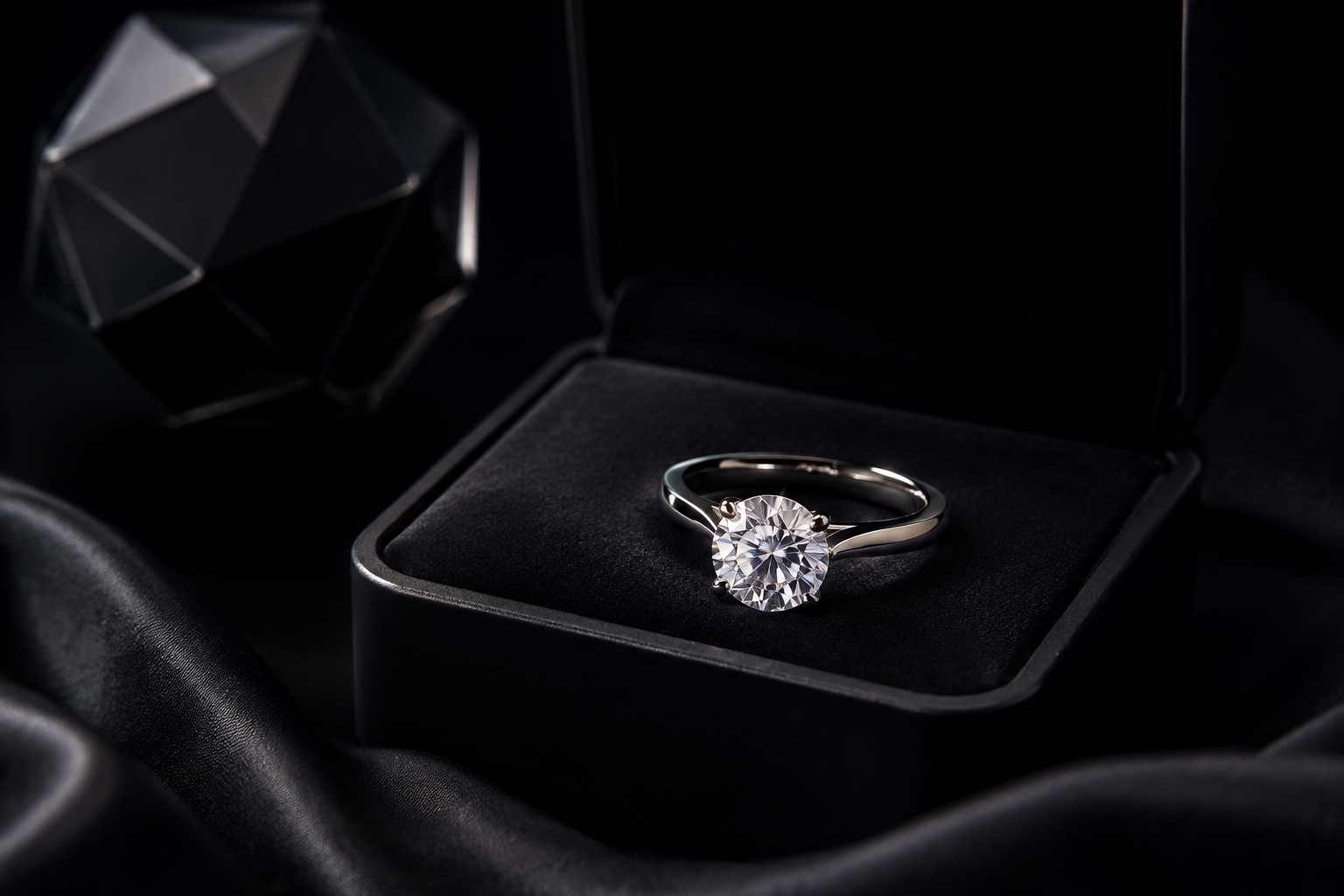
Before buying a diamond ring, look beyond the carat size and price tag. You’ll want to understand the diamond’s 4Cs, choose the right shape and cut, check its certification, decide between natural and lab-grown diamonds, and make sure the ring’s size, setting and metal suit how you plan to wear it.
There are also a few things buyers often overlook until after they’ve made the purchase, such as how the diamond actually looks on the finger, whether the ring can be resized, what the return and exchange policies cover, and what the warranty includes.
Whether you're buying an engagement ring, a gift, or a diamond ring for yourself, a little research beforehand can help you avoid common mistakes and spend your budget on the features that matter most to you. You don't need to know everything about diamonds before you start shopping. You just need to know what to check.
Decide Your Budget Before Choosing a Diamond
Start with a budget you’re comfortable with before you start comparing diamonds. There is no fixed amount you should spend on a diamond ring. The right budget depends on your finances, the occasion and which features matter most to you.
Once you have a budget in mind, you can decide where you want to spend more. For example, you might prefer a better-cut diamond for more sparkle, a larger carat for greater presence, or a particular colour or clarity grade.
If you're working with a tighter budget, you don't necessarily have to compromise on the overall look. Lab grown diamonds can give you more flexibility in choosing size and quality within the same budget.
The important thing is to set the budget first and then compare diamonds within it, rather than choosing a diamond you love and trying to justify the price afterwards.
Understand the 4Cs Before Comparing Diamonds
The 4Cs: Cut, Colour, Clarity and Carat — are the basic factors used to evaluate a diamond. Understanding what each one means helps you decide where to spend your budget.
-
Cut: Affects how well the diamond reflects light and how much it sparkles.
-
Colour: Describes how colourless or warm the diamond appears.
-
Clarity: Refers to the diamond's internal and external characteristics.
-
Carat: Measures the diamond's weight, not exactly how large it will look.
You don't need the highest grade in every category. A well-cut diamond with good overall balance can often look more impressive than simply choosing the biggest carat or highest grades.
Diamond Shape vs Diamond Cut: Know the Difference
Shape is the diamond's outline, while cut describes how well it has been proportioned and finished to interact with light. Round, oval, pear, princess and emerald are examples of diamond shapes.
Cut quality affects how much sparkle and brightness you see. Two diamonds can have the same shape and carat weight but look very different if their cut quality differs.
So, choose a shape based on the style you like, then pay attention to cut quality and proportions when comparing diamonds.
Natural vs Lab-Grown Diamonds: What Should You Choose?
Both natural and lab-grown diamonds are real diamonds. The main difference is their origin: natural diamonds form naturally underground, while lab-grown diamonds are created using advanced technology in a controlled environment.
For buyers, the choice often comes down to budget and personal preference. Lab-grown diamonds are generally more affordable, which can give you more flexibility to choose a larger diamond or higher specifications within the same budget.
Whichever you choose, focus on the individual diamond's quality, certification and overall appearance rather than assuming one option is automatically better.

Diamond Certification: What Should You Check?
A diamond certificate, or grading report, gives you an independent record of the diamond's key characteristics. It helps you verify what you're actually buying instead of relying only on a product description.
Before purchasing, check that the report includes details such as:
-
Carat weight
-
Colour and clarity grades
-
Cut grade, where applicable
-
Diamond measurements
-
Report or certificate number
Also make sure the certificate details match the diamond you're purchasing. For lab-grown diamonds, a report from a recognised laboratory such as IGI can provide additional confidence about the diamond's specifications.
Choosing the Right Metal for Your Ring
The metal you choose affects how the diamond looks, how the ring feels to wear, and how it fits into your everyday style. The most common options are yellow gold, white gold, rose gold and platinum.
-
Yellow gold: Warm, classic and timeless. It can create a beautiful contrast with a colourless diamond.
-
White gold: Clean and contemporary, making the diamond the main focus of the ring.
-
Rose gold: Has a soft pink tone and gives the ring a warmer, more romantic appearance.
-
Platinum: Naturally white, durable and well suited to everyday wear. It is also typically more expensive than gold.
Don't choose a metal based only on which one looks best in a product photo. Think about the diamond's colour, your existing jewellery, your lifestyle and how you want the ring to look years from now. The right metal should complement the diamond rather than compete with it.
Getting the Right Ring Size and Fit
Your ring should feel secure without being uncomfortably tight. A ring that is too loose can spin or slip off, while one that is too tight can become uncomfortable, especially when your fingers swell during the day or in warmer weather.
Keep the band width in mind too. Wider bands can feel tighter than thin bands, even when both are the same ring size.
If you're buying an engagement ring online, check whether the jeweller offers resizing and what it costs before placing your order. This is especially important if you're unsure about the recipient's size.
The goal is simple: the ring should sit comfortably, stay securely on your finger and leave enough room for normal movement.
Choose a Setting That Works for Everyday Wear
The setting affects both the look of the ring and how practical it is to wear every day. Think about your lifestyle as well as the style you like.
-
Solitaire: Keeps the focus on the centre diamond and gives a clean, timeless look.
-
Halo: Surrounds the centre diamond with smaller stones, adding sparkle and making the ring look more substantial.
-
Three-stone: Adds side diamonds for more presence and a classic symbolic design.
-
Bezel: Surrounds the diamond with metal, giving it a sleek, low-profile look and added protection.
If you plan to wear the ring every day, consider how high the diamond sits, how exposed the setting is, and whether it could catch on clothing or objects. A beautiful setting should also be comfortable and practical for your routine.
Diamond Carat Size: How Will It Look on Your Finger?
Carat tells you how much a diamond weighs, but it doesn't tell you exactly how large it will look on your finger. The diamond's shape, length and width, proportions, and your finger size can all affect its visual presence.
This is why two diamonds with the same carat weight can look different. An elongated shape such as an oval or pear may cover more visible area than a round diamond of similar weight.
When comparing diamonds, look at the carat weight and millimetre measurements together. If you want a larger-looking diamond without simply increasing the carat, choosing an elongated shape or a setting that adds visual presence can also help.
The best size is the one that feels proportionate to your hand, ring design and personal style, rather than simply the highest carat you can afford.
Check Return, Exchange, Resizing and Warranty Policies
Before buying a diamond ring, understand what happens if the ring doesn't fit, needs a repair, or simply isn't right for you. Return and exchange policies can vary, especially for customised or personalised rings.
Before placing your order, check:
-
Return and exchange period: How many days do you have to return or exchange the ring?
-
Resizing: Is resizing available, and is there an additional charge?
-
Customised rings: Can personalised or customised rings be returned?
-
Warranty: What does the warranty cover, and for how long?
-
Repairs: Are future repairs or maintenance covered?
These details may not seem important when you're buying the ring, but they can make a big difference later. Always check the policy before paying, not after you need it.
Common Mistakes People Make When Buying a Diamond Ring
Buying a diamond ring can get confusing when there are so many options. A few common mistakes are worth avoiding:
-
Focusing only on carat: A bigger diamond isn't automatically a better-looking one. Cut, shape and proportions matter too.
-
Confusing shape with cut: Shape is the outline; cut affects how well the diamond handles light.
-
Ignoring actual dimensions: Two diamonds with the same carat weight can look different on the finger.
-
Choosing the highest grades blindly: You may not need the highest colour or clarity grade if the difference isn't visible to the eye.
-
Skipping certification: Always check the diamond's grading report and make sure its details match the stone.
-
Forgetting ring size and everyday wear: A beautiful ring still needs to fit comfortably and suit your lifestyle.
-
Not checking after-sales policies: Understand the return, exchange, resizing and warranty terms before purchasing.
The biggest mistake is choosing the diamond based on one number or feature. Look at the diamond, setting and overall ring together, and make sure they fit both your budget and how you plan to wear them.
Where to Shop Diamond Rings
Armed with this checklist, you're ready to shop for a diamond ring with confidence
Explore EMORI's engagement rings and solitaire rings, or shop by budget, from under ₹20K, ₹20K–₹30K, ₹30K–₹50K, and ₹50K & above.
Looking for something more personal? Customise your own diamond ring with EMORI's design team and create a piece that feels uniquely yours.
FAQs
What Should I Check Before Buying a Diamond Ring?
Start with your budget, then check the diamond's 4Cs, shape, cut, certification and actual measurements. Also consider the metal, setting, ring size, everyday wear, and the jeweller's return, resizing and warranty policies. Looking at the complete ring rather than just the carat weight will help you make a more informed choice.
Is Diamond Certification Important?
Yes, diamond certification is important because it provides an independent record of the diamond's key characteristics. Check the report for details such as carat weight, colour, clarity, measurements and cut grade where applicable, and make sure the report details match the diamond you're buying.
What Should I Spend on a Diamond Ring?
There is no fixed amount you need to spend on a diamond ring. Set a budget that is comfortable for you, then decide which features matter most, whether that's diamond size, sparkle, colour, clarity or the overall ring design. A well-balanced ring that fits your budget is a better choice than stretching your finances simply to buy a larger diamond.
Share:
Diamond Shape vs. Diamond Cut | What’s the Difference?
Brilliant Cut vs Rose Cut Diamond: What’s the Difference?