

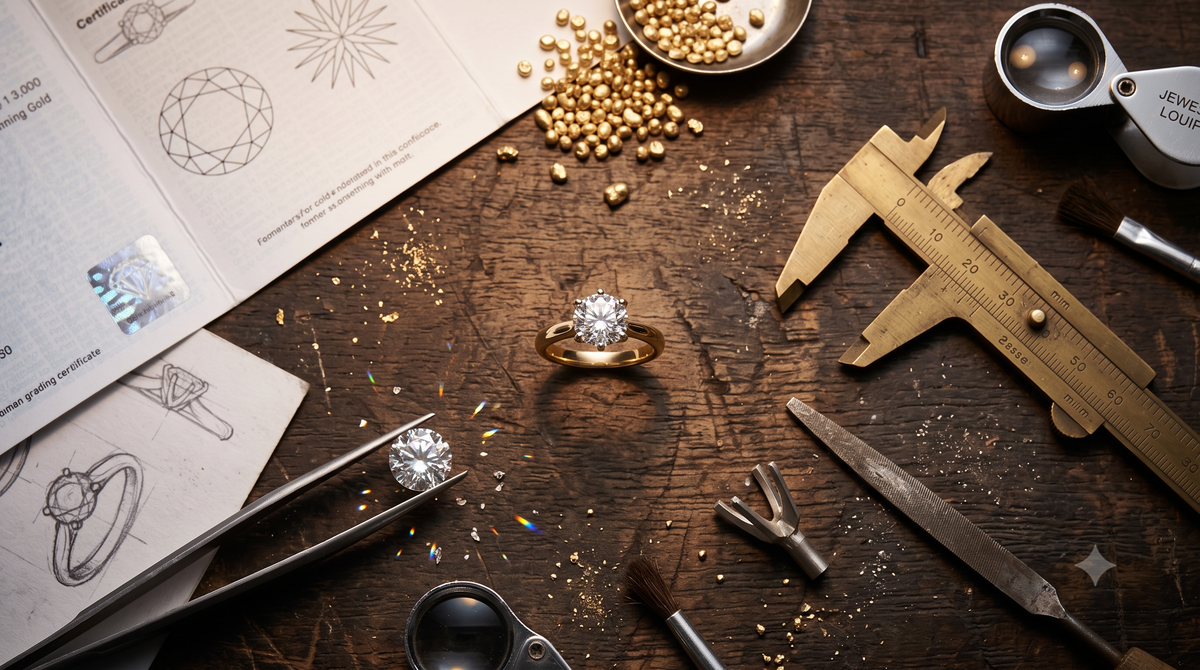
A diamond ring is valuable when the quality of the diamond, materials, craftsmanship and design come together to justify its price. The diamond’s 4Cs cut, colour, clarity and carat weight are important, but they are only part of the picture. The metal, setting, certification and quality of workmanship also influence the ring’s overall value.
The diamond itself usually accounts for a significant part of the ring’s price. However, a larger diamond does not automatically mean a more valuable ring. A well-cut diamond can have stronger sparkle and visual appeal than a larger stone with weaker proportions. Similarly, a high-quality diamond can lose some of its practical value if it is placed in a poorly made or uncomfortable setting.
For buyers, this distinction matters. Price tells you what a ring costs, while value reflects what you are getting for that price. A valuable diamond ring should bring together a well-chosen diamond, reliable certification, quality materials and craftsmanship that suits how and where you plan to wear it.
How Do the 4Cs Affect a Diamond Ring's Value?
The 4Cs: cut, colour, clarity and carat weight are the main factors used to evaluate a diamond, and each can influence its price. However, they do not affect value in exactly the same way. A diamond with the highest grade in every category is not necessarily the best value for your money.
Cut has a major effect on how a diamond looks because it influences how effectively the stone reflects light. . A well-cut diamond can appear brighter, more lively and more brilliant, making cut an important factor to consider when comparing stones of similar size.
Carat weight refers to a diamond's weight, not simply how large it looks from the top. As carat weight increases, diamonds of comparable quality generally become rarer, which is one reason their prices can rise significantly. However, two diamonds with the same carat weight can still have very different values depending on their other characteristics.
Colour measures how much colour is visible in a diamond. Diamonds that are closer to colourless generally command higher prices, but a slightly lower colour grade may offer better value if the difference is difficult to notice once the diamond is set.
Clarity refers to the internal inclusions and external blemishes found in a diamond. Higher clarity grades are generally more expensive, but the highest clarity is not always necessary for a beautiful-looking stone. If a diamond appears clean to the naked eye, paying a large premium for a higher clarity grade may not make a noticeable difference.

The best approach is to consider the 4Cs as a combination rather than chasing the highest grade in each category. A well-balanced diamond can give you the size, sparkle and appearance you want without spending your entire budget on specifications that may have little visible impact.
What Else Adds Value to a Diamond Ring?
The diamond is only one part of a ring’s overall value. The metal, setting, craftsmanship, certification and design can all affect what you pay and how well the ring holds up to everyday wear.
The metal influences both the ring’s price and its durability. Gold and platinum differ in purity, composition and cost. For example, 14KT gold contains 58.5% pure gold, while 18KT gold contains 75%. Platinum has a higher purity and is naturally durable, which can make it a more premium option. The right choice depends on whether your priority is durability, purity, appearance or budget.
The setting and craftsmanship determine how securely the diamond is held and how well the ring is finished. A well-made setting should protect the stone while complementing its shape and allowing it to interact with light. Precise stone setting, smooth finishing and comfortable proportions are especially important when the ring is meant to be worn regularly.
Certification provides documented information about the diamond’s characteristics and gives buyers a reliable way to verify what they are purchasing. For a lab-grown diamond, a recognised grading report can also document its laboratory-grown origin along with details such as its carat weight, colour and clarity. Certification itself does not make a diamond more valuable, but it gives you greater confidence in the quality you are paying for.
Design and wearability also matter. A thoughtfully proportioned ring that suits the wearer’s style and lifestyle can offer more practical value than a design chosen only because it is elaborate or currently trending. For an everyday ring, comfort, durability and a secure setting may matter just as much as its visual appeal.
Together, these factors determine whether the ring feels well-made and worth its price. A valuable diamond ring is not simply one with a high-quality diamond; it is a complete piece where the diamond, materials and workmanship work well together.
Does a Higher Price Always Mean a More Valuable Ring?
Not necessarily. A higher-priced diamond ring is not always a more valuable ring for the person buying it. Price can increase because of a larger carat weight, higher colour or clarity grades, a more expensive metal, or a more elaborate design. But paying more for one specification does not guarantee that you will see or feel a meaningful difference.
For example, you may pay a significant premium for a higher clarity grade even when both diamonds appear equally clean to the naked eye. Similarly, choosing a much higher colour grade may offer little visible difference once the diamond is set, particularly when paired with certain metals.
Instead of choosing the ring with the highest specifications, consider what actually matters to you. A well-cut diamond with good visual performance, reliable grading, quality metal and a well-made setting may offer better value than a more expensive ring where you are paying a premium for specifications that make little visible difference.
How Can You Choose a Valuable Diamond Ring Within Your Budget?
Choosing a valuable diamond ring within your budget does not mean compromising on quality. It means deciding which features matter most to you and where your money will make the biggest difference.
Start by setting a realistic budget and then compare rings based on the complete picture rather than carat weight alone. Pay attention to the diamond’s cut and overall appearance, check its colour and clarity, and look for a grading report that verifies its characteristics.
You should also consider the metal and setting. If the ring is meant for everyday wear, durability and comfort may be more important than choosing the most elaborate design. A well-made 14KT or 18KT gold ring with a thoughtfully selected diamond can be a practical choice, depending on your priorities.
It also helps to compare diamonds with slightly different grades. You may find that moving down one clarity or colour grade has little visible impact while freeing up more of your budget for a better cut, larger stone or design you prefer.
Most importantly, buy for what you can see, wear and appreciate, rather than simply chasing the highest specifications. A valuable ring is one that combines reliable diamond quality, good craftsmanship and a design that you will genuinely enjoy wearing for years.
Conclusion
A diamond ring’s value is about more than its price tag or the size of its diamond. The 4Cs, certification, metal, craftsmanship, setting and design all contribute to the quality and value of the complete ring. Instead of automatically choosing the biggest diamond or the highest grade, focus on finding the right balance between quality, appearance, durability and budget. A well-cut, properly graded diamond in a thoughtfully crafted setting can offer better value than simply paying more for specifications you may not notice.
Ultimately, the most valuable diamond ring is one that gives you confidence in what you are buying, suits how you plan to wear it and feels worth the price you paid.
Find a Diamond Ring That Fits Your Budget
Knowing what makes a diamond ring valuable can help you make a more informed choice. Explore Emori’s collection of certified lab-grown diamond rings to compare designs, diamond quality and metals based on your budget and how you plan to wear the ring.
Frequently Asked Questions
1. Which 4C is most important when buying a diamond ring?
Cut is particularly important because it has a major effect on how well a diamond reflects light and how much brilliance it shows. However, the best choice depends on the balance of cut, colour, clarity and carat weight, along with your budget and what you want the diamond to look like.
2. Does diamond certification affect its value?
Certification does not automatically increase a diamond’s monetary value. Instead, a grading report from a recognised gemological laboratory documents the diamond’s characteristics and provides an independent reference for its quality.
3. Does a bigger diamond mean a more valuable ring?
Not necessarily. A larger diamond generally costs more, but carat weight alone does not determine a ring’s value. Cut, colour, clarity, certification, metal, craftsmanship and the setting also influence what you are paying for.
Share:
How to Choose a Diamond Ring They’ll Love for Years
What’s the Best Diamond Shape for Everyday Wear?