

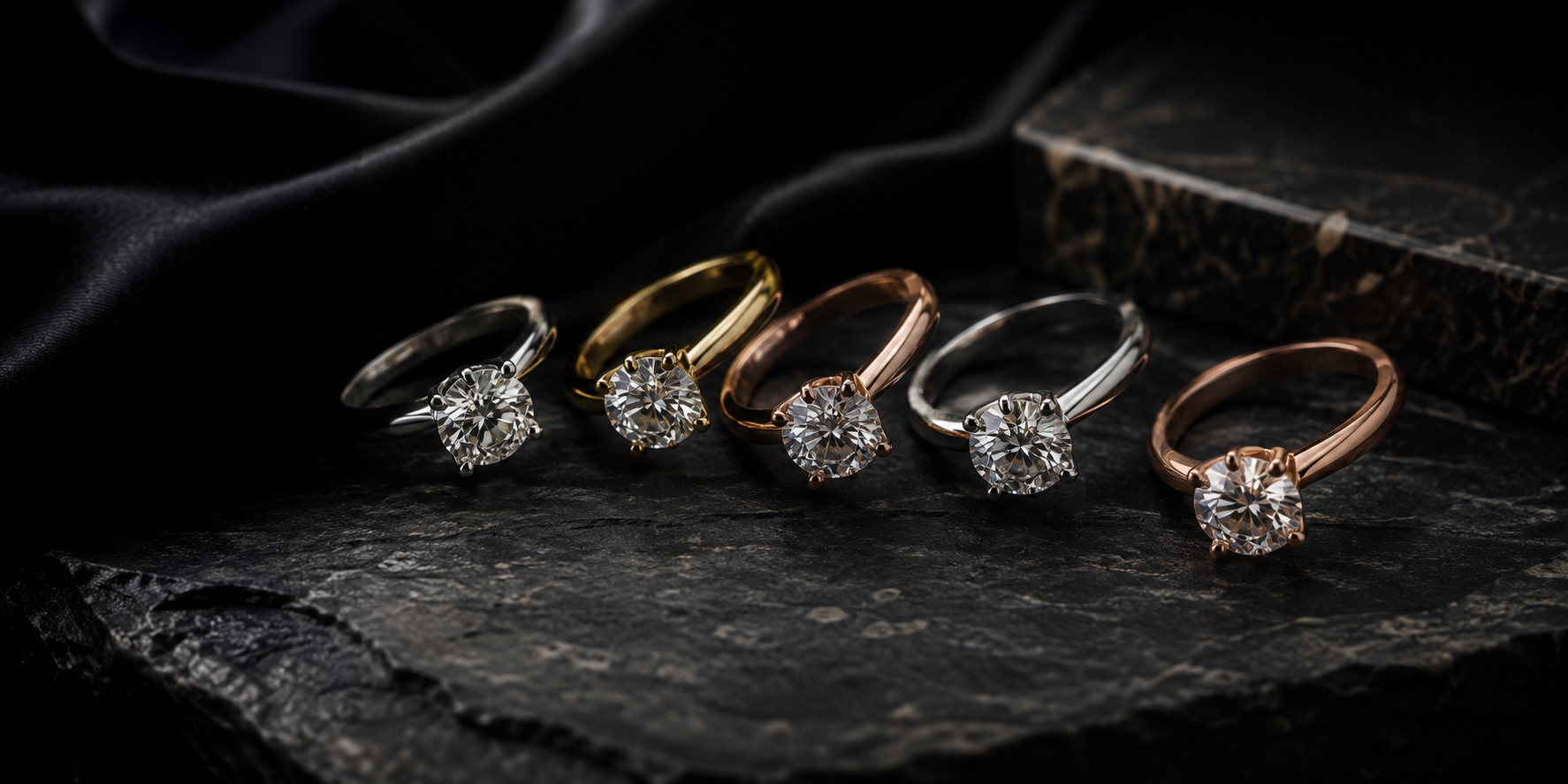
For most buyers, 14KT or 18KT gold is a strong all-round choice for a diamond ring, offering a balance of durability, appearance and value. Choose 14KT gold for everyday practicality, 18KT gold for higher gold purity and a richer finish, or platinum if you prefer a premium, naturally white metal.
The choice also depends on gold colour, diamond colour and shape, lifestyle, budget and maintenance. Yellow, white and rose gold can each create a different look around the same diamond.
This guide compares 14KT vs 18KT gold, yellow vs white vs rose gold, durability, diamond compatibility and maintenance to help you choose the right metal.
Gold Purity: What Does KT Mean?
Before choosing between 14KT and 18KT gold, it helps to understand what KT (karat) actually means. Gold is naturally very soft, so it is mixed with other metals to make it stronger and more suitable for jewellery.
|
Gold purity |
Pure gold content |
What it means |
|
9KT |
37.5% |
Lower gold content, generally more alloy metals |
|
14KT |
58.5% |
Balance of gold purity and durability |
|
18KT |
75% |
Higher gold purity and richer appearance |
A higher KT means more pure gold, but higher purity does not automatically make one option better. Your decision should also depend on how often you plan to wear the ring, your budget, the colour you prefer and how much durability you need.
14KT vs 18KT Gold: Which Is Better for a Diamond Ring?
Choose 14KT gold if you prioritize durability and value; choose 18KT gold if higher gold purity and a richer appearance matter more to you. Both are suitable for diamond rings, so
neither is universally better.
|
Feature |
14KT Gold |
18KT Gold |
|
Pure gold content |
58.5% |
75% |
|
Durability |
Generally higher |
Generally softer |
|
Gold content |
Lower |
Higher |
|
Price |
Generally more affordable |
Generally more expensive |
|
Everyday wear |
Excellent |
Good with proper care |
|
Best for |
Durability and value |
Higher gold purity and richer appearance |
Neither is universally better. 14KT and 18KT gold offer different balances of purity, durability, appearance and price.
Yellow Gold vs White Gold vs Rose Gold
Once you have decided on the gold purity, the next choice is colour. Yellow gold, white gold and rose gold are all gold alloys, but their different colours create different looks for a diamond ring.
-
Yellow Gold: warm and timeless: Creates a classic contrast with the diamond and works particularly well for traditional, solitaire and vintage-inspired designs.
Choose it if: You prefer a traditional look or want the diamond to stand out against a warm-toned setting. -
White Gold: bright and modern: Its silvery-white appearance creates a clean, seamless look around a colourless-looking diamond and suits contemporary designs.
Choose it if: You want a modern, minimalist appearance or want the setting to blend closely with the diamond. -
Rose Gold: soft and romantic: Its pinkish tone, created by copper in the alloy, adds warmth and gives the ring a distinctive appearance.
Choose it if: You prefer a romantic, feminine or less traditional look.
Quick takeaway: Choose yellow gold for classic warmth, white gold for a bright modern look, and rose gold for a soft, romantic finish.

Is Platinum a Good Choice for a Diamond Ring?
Platinum is a strong choice if you want a naturally white, durable and premium metal. Its naturally white finish creates a clean backdrop for diamonds, while its density makes it well suited to rings designed for long-term wear. The main drawback is that platinum generally costs more than gold.
Choose platinum for a naturally white, premium finish; choose gold for more flexibility in colour and budget.
How Does Metal Colour Change the Appearance of a Diamond?
The metal colour does not change the actual quality of a diamond, but it can change how the diamond looks against its setting. A white, yellow or rose gold setting creates a different contrast around the stone, which can influence whether the diamond appears brighter, warmer or more noticeable.
|
Metal colour |
Effect on diamond appearance |
|
White gold |
Creates a bright, seamless look, especially with higher-colour diamonds |
|
Yellow gold |
Creates warm contrast and can complement slightly warmer diamonds |
|
Rose gold |
Adds soft, warm contrast for a romantic appearance |
Which Metal Works Best With Different Diamond Colours and Shapes?
The best metal for a diamond ring depends on the diamond’s colour and shape. There is no single metal that is right for every diamond, but certain combinations can create a more balanced and visually appealing look.
|
Diamond |
Metal to consider |
Overall effect |
|
Higher-colour diamond |
White gold or platinum |
Clean and seamless |
|
Slightly warmer diamond |
Yellow or rose gold |
Warm and harmonious |
|
Round |
Any metal |
Versatile and classic |
|
Oval |
Any gold colour |
Classic to romantic |
|
Emerald-cut |
White gold or platinum |
Clean and elegant |
|
Cushion-cut |
Yellow or rose gold |
Warm and vintage-inspired |
|
Pear/Marquise |
White, yellow or rose gold |
Modern or distinctive |
|
Princess/Radiant |
White or warm-toned metals |
Crisp or contrasting |
Note: These are styling suggestions rather than strict rules. The diamond, setting and metal should be considered as one design.
Durability and Suitability for Everyday Wear
For everyday wear, choose a metal and setting suited to your lifestyle. The metal is only one part of a ring's durability; the setting, prongs and how you use the ring also matter.
-
Remove the ring during manual work, sports and high-impact activities.
-
Avoid exposure to harsh cleaners and chlorine.
-
A secure setting helps keep the diamond protected.
-
Regular cleaning and occasional setting checks can help maintain the ring.
Choosing a Metal for an Engagement Ring vs Everyday Ring
For an engagement ring, prioritize long-term wear, personal style, diamond setting and the level of gold purity you prefer. 14KT, 18KT gold and platinum can all be suitable choices.
For an everyday or occasional ring, you have more flexibility to prioritize colour, design and budget. 9KT, 14KT and 18KT gold can all be considered depending on your preferences.
Ultimately, choose the metal based on how you will wear the ring, how often you will wear it and the look you want to achieve. There is no single metal that is right for every type of diamond ring.
Shop Diamond Rings by Metal
Now that you know which metal works best for your style, lifestyle and budget, you can explore diamond rings in the metal and finish you prefer at Emori.
-
Yellow Gold Diamond Rings: Explore warm, classic designs for a timeless look.
-
White Gold Diamond Rings: Discover clean, contemporary styles that create a bright look around your diamond.
-
Rose Gold Diamond Rings: Browse warm, romantic designs with a distinctive finish.
-
9KT Gold Rings: A practical option if you are looking for a lighter, more accessible gold choice.
-
Explore All Diamond Rings: Browse Emori’s complete ring collection and compare different designs, metals and diamond styles.
Whether you prefer the everyday practicality of 14KT gold, the richer finish of 18KT gold or the warmth of a particular gold colour, Emori lets you explore diamond rings based on the look and feel you want.
FAQs
Which gold is best for daily wear?
Both 14KT and 18KT gold are suitable for daily wear. 14KT is more durable and affordable, while 18KT has higher gold purity and a richer finish but is slightly softer.
Is 18KT better than 14KT?
18KT is not necessarily better than 14KT; it depends on your priorities. 18KT offers higher gold purity and a richer appearance, while 14KT is more durable, affordable, and better suited to everyday wear.
Which gold makes diamonds look brighter?
White gold can make a diamond appear brighter and whiter because its white, reflective surface creates a clean backdrop around the stone. However, the diamond’s cut has a much greater impact on its actual sparkle and brilliance.
Share:
How to stack a chevron ring?
How to stack a chevron ring?