

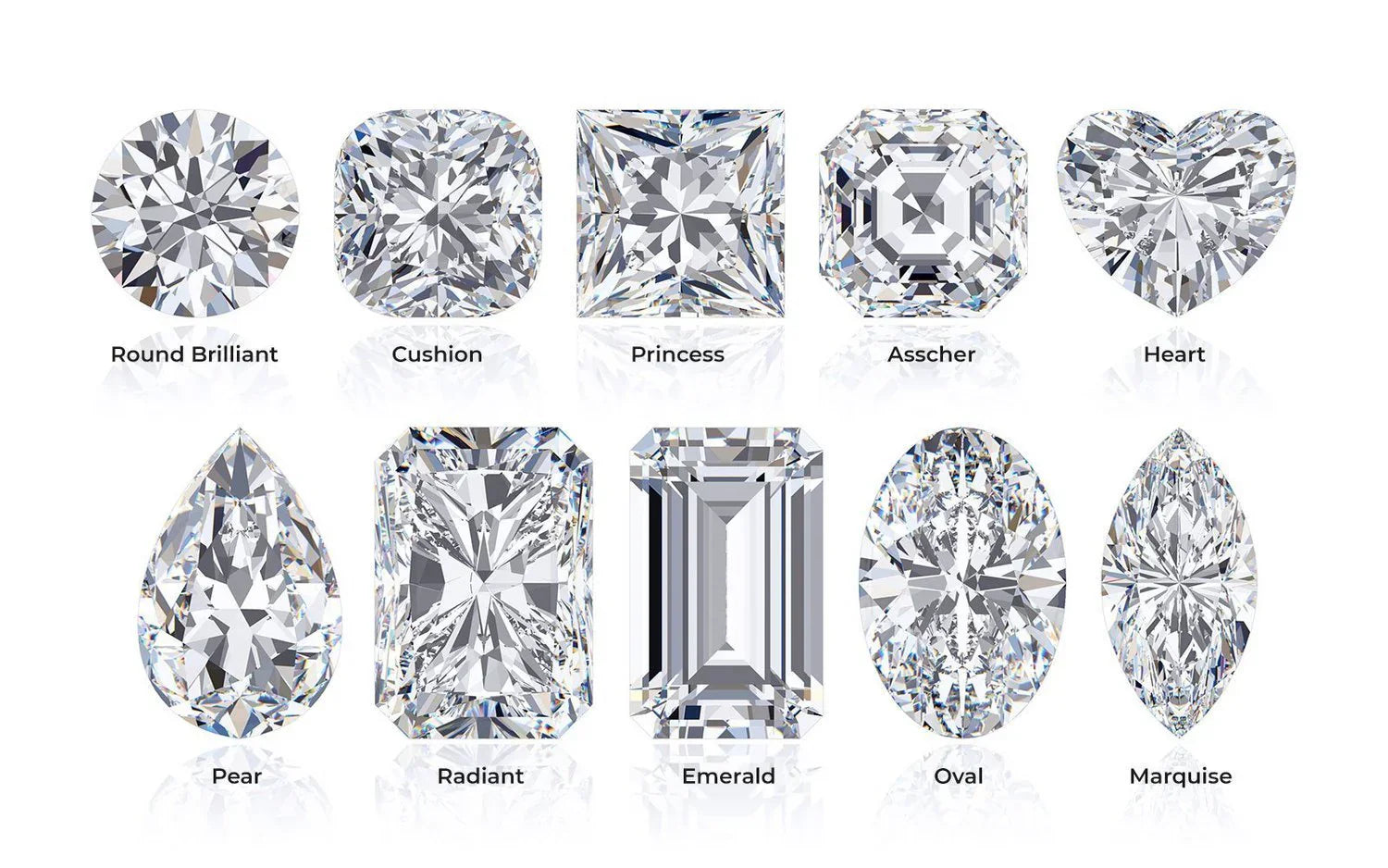
When people talk about a diamond’s beauty, they often point to its cut. Cut is the single most important factor that decides how much a diamond sparkles. This is true for both lab-grown and mined diamonds. In this guide, you will learn what “cut” really means, which cuts perform best in different situations, and practical tips to pick a cut that gives the most value and visual impact.
What does “cut” mean?
Cut is not the same as shape. Shape is the outline you see from above, like round, oval, or princess. Cut refers to how well the diamond’s facets are proportioned, the angles between them, and how precisely they are made. A well cut diamond sends light back to your eye in bright flashes. A poorly cut diamond loses light through its sides or bottom and looks dull even if it has good colour and clarity.
Why cut matters for lab-grown diamonds
Lab-grown diamonds are chemically and optically identical to mined diamonds. That means cut affects lab-grown diamonds in the same ways as mined stones. A high-quality cut will make a smaller diamond look more lively than a larger diamond with a poor cut. So, if you want the best visual impact for your budget, focus on cut first.
The most popular cuts and how they perform
Here are the common cuts people choose for engagement rings, with what to expect from each.
Round Brilliant -This is the most popular and generally the best performer for sparkle. Its facet pattern is designed to return maximum light. If you want the most fire and brightness, round brilliant is the safest choice. It also hides small inclusions better than many fancy shapes.
Princess - A square shape with sharp corners. It offers strong brilliance and often gives good size for the price because it yields more polished weight from a rough diamond. It works well in modern settings and balances sparkle with a clean geometry.
Cushion - A softer square or rectangle with rounded corners. It has larger facets and a warm glow. Cushion cut is a good choice if you want a slightly vintage look with good light performance.
Emerald and Asscher - These are step cuts. They do not flash light in the same way as brilliant cuts. Instead they show broad flashes and a clear, hall-of-mirrors appearance. They are ideal if you prefer a refined, understated look and if the diamond has high clarity, because step cuts reveal inclusions more easily.
Oval, Pear, and Marquise - These elongated shapes create an illusion of longer fingers. They can look larger carat for carat. Oval and pear can show a dark area known as the bow tie across the centre. Look for stones with minimal bow tie effects or choose settings that hide it.
Radiant - A hybrid that mixes steps and brilliant facets. It offers high sparkle and works well in many settings. It is a strong option if you want a rectangular or square look with lively brilliance.
Which cut is “best”?
There is no single best cut for everyone. The choice depends on priorities.
- If you want the most sparkle and maximum optical performance, choose a well-cut round brilliant
- If you want a good sparkle with a modern square look, consider princess
- If you prefer elegance with visible clarity, choose emerald or asscher
- If you want a unique or vintage feel, a cushion is a great option.
- For a larger look on the finger,oval, pear, or marquise can be ideal.
Proportions and quality grades to watch for
When comparing diamonds, pay attention to these technical but practical points:
- Cut grade. For round brilliants, prefer Very Good or Excellent cut grades. For fancy shapes, there is no single universal grade, so look at proportions and light performance instead.
- Depth and table. These are numbers that influence light return. Ideal ranges differ by shape. For round brilliant, a depth around 59 to 62 percent and a table around 54 to 58 percent often work well. For other shapes, use a trusted jeweller’s guidance.
- Symmetry and polish. Aim for Good or better. Poor symmetry reduces sparkle.
- Light performance reports. Some vendors supply ASET or Ideal-Scope images. These show how a diamond handles light and can be more helpful than numbers alone.
How setting and finger shape change the result
The ring setting influences how a cut looks. Halo settings magnify the centre stone. Solitaires keep focus on the cut. Prong settings show the diamond to its best advantage. Also consider finger proportions. Elongated shapes lengthen short fingers. Wider bands can make small stones look smaller.
Practical buying tips
- See the diamond in different lights. Request videos and daylight photos. Sparkle can look different under indoor lighting.
- Buy certified stones. Certificates from IGI, GIA, or HRD describe cut, colour, clarity, and carat weight. For lab-grown diamonds, IGI and GIA certificates are commonly used.
- Ask for light performance images. An ASET image or similar helps judge real-world sparkle
- Prioritise cut and shape first. Once you pick cut and shape, balance colour and clarity for value. For brilliant cuts, you can save by choosing slightly lower colour or clarity without losing much visual appeal
- Try before you buy. If possible, view similar shapes in person to see what feels right.
Final thought
The best cut for a lab-grown diamond depends on what you value most. If you want maximum sparkle choose a well cut round brilliant. If you want a distinctive look with good brightness choose princess or radiant. If you prefer clean, geometric beauty choose emerald or asscher. In every case, a well executed cut will give you the most visual return for your budget.
Share:
Why Personal Consultations Matter in Online Jewellery Shopping
Why Karan Aujla Loves Diamond Jewellery