

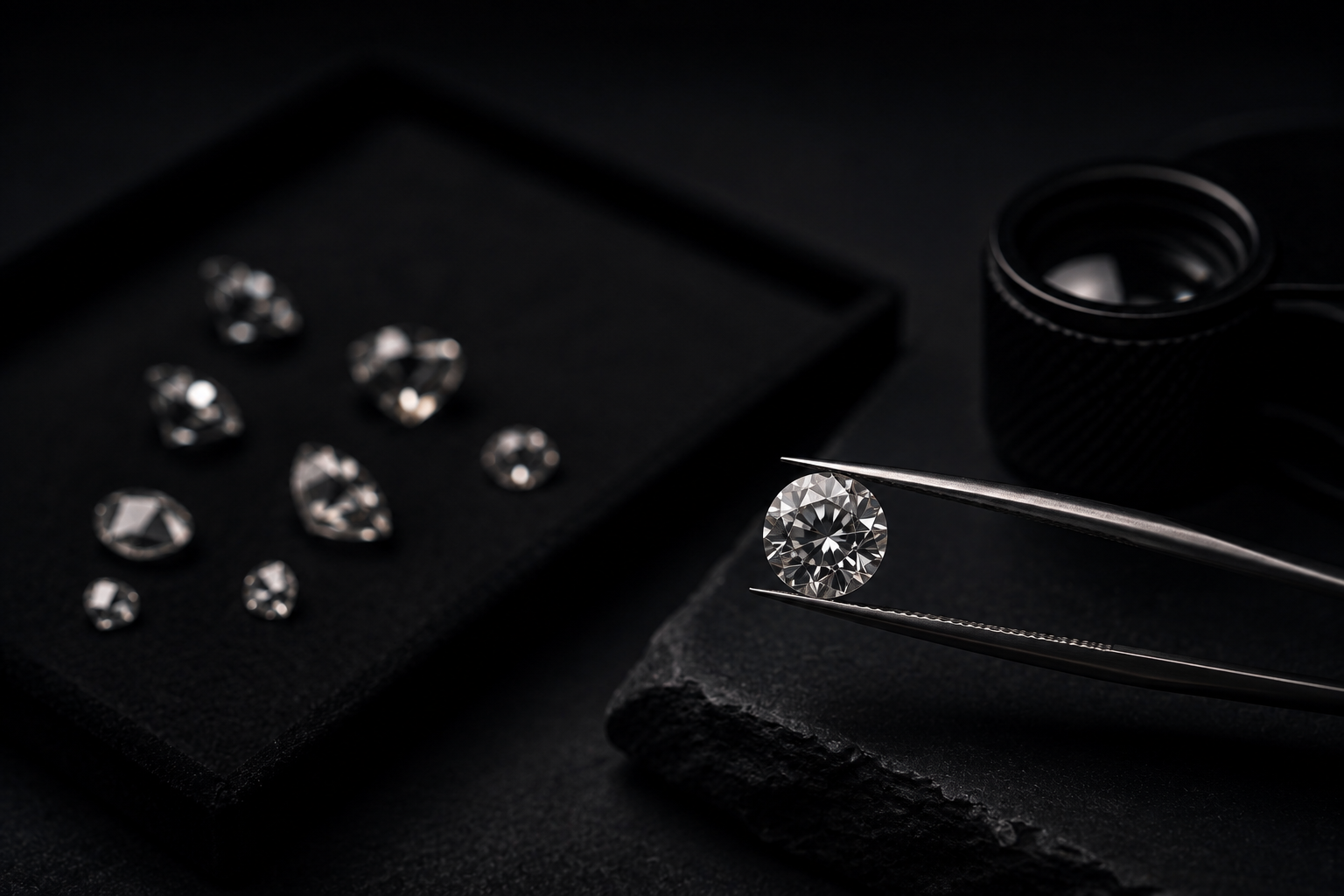
An IGI certificate tells you what a diamond is and how it has been graded. It records important details such as the diamond’s origin, carat weight, color, clarity, cut, measurements, polish and symmetry. For a lab-grown diamond, an IGI report can also identify the stone as laboratory-grown and, where applicable, mention its CVD or HPHT growth method and any disclosed treatments. In simple terms, it gives you a documented record of the diamond’s characteristics so you can understand and compare what you are buying. However, it does not tell you what the diamond should cost or whether it is automatically the best choice for your budget.
If you are buying a lab-grown diamond ring, this distinction is important. A certificate is not just paperwork that comes with your purchase. It gives you information that can help you compare diamonds and make a more informed decision.
What Is an IGI Certificate?
An IGI certificate, more accurately referred to by the International Gemological Institute as a grading report, is issued after a diamond has been examined and graded. IGI is one of the major gemological laboratories that grades both natural and laboratory-grown diamonds.
For a lab-grown diamond, the report identifies the stone as laboratory-grown and records its relevant grading characteristics. Depending on the report, you can find information about the diamond’s shape, 4Cs, measurements, polish, symmetry, growth method and other identifying details.
Think of it as the diamond’s grading and identification record. Instead of relying only on a jeweller’s description such as “premium quality” or “high-grade diamond,” you have documented characteristics that you can review and compare.
What Does an IGI Certificate Tell You?
The diamond’s origin
If you are specifically shopping for a lab-grown diamond, the IGI report identifies the stone as laboratory-grown. This is important because a lab-grown diamond is different from a diamond simulant such as cubic zirconia. A lab-grown diamond has the characteristic properties of diamond; the difference is that it is created in a controlled environment rather than formed naturally underground.
The 4Cs
An IGI report gives you the diamond’s 4Cs: carat, color, clarity and cut. Together, these grades help you understand the diamond’s quality and characteristics.
Carat tells you the diamond’s weight, while color indicates how much body color it shows. Clarity describes the internal and surface characteristics visible under magnification. Cut describes how well a diamond’s proportions and finish affect its interaction with light, where a cut grade is applicable.

The important thing is not to look at these grades individually. A higher grade in one category does not automatically make a diamond the better choice. For example, you may find a well-cut diamond with a slightly lower clarity grade that looks just as clean to the naked eye as a higher-clarity stone, while leaving more room in your budget for size or design.
So, when reading an IGI report, use the 4Cs to compare diamonds as a whole, rather than simply choosing the highest grade in every category.
Measurements, polish and symmetry
The report also records the diamond’s measurements, usually in millimetres. This is useful because carat weight tells you how much a diamond weighs, not exactly how large it will look from the top.
Two diamonds with the same carat weight can have different dimensions and proportions, so checking measurements alongside carat can help when comparing stones.
IGI also records polish and symmetry, which provide information about the quality of the diamond’s surface finish and the precision of its faceting and overall shape.
Growth method and treatments
For laboratory-grown diamonds, the report can provide information about the growth method, such as CVD (Chemical Vapor Deposition) or HPHT (High Pressure High Temperature), where reported. Treatment information may also be disclosed when applicable.
Seeing CVD or HPHT on a report does not mean one diamond is automatically better than another. The growth method tells you how the diamond was created; its overall quality still needs to be considered through its grading characteristics and appearance.
Report number and laser inscription
An IGI report has a unique report number that can be used to verify the grading record. IGI also uses laser inscription to help connect a graded diamond with its report. Where applicable, the inscription can be viewed on the diamond’s girdle under magnification.
This creates an additional link between the physical diamond and its grading report, which is particularly useful when purchasing a significant diamond.
How Do You Verify an IGI Certificate?
If you are buying a lab-grown diamond, verifying the report is a simple step worth taking. Ask the jeweller or retailer for the IGI report number and check it through IGI’s official online verification system.
Compare the online report with the information provided by the seller. Check the carat weight, shape, color, clarity, measurements and other relevant details. If the diamond has a laser inscription, you can also ask the jeweller to show it under magnification and confirm that it matches the report.
This is especially useful when buying a diamond online because you may not have the opportunity to examine the stone yourself before purchasing it.
What an IGI Certificate Does Not Tell You
This is where many buyers misunderstand diamond certification.
An IGI report tells you about the characteristics and grading of the diamond. It does not tell you what the diamond should cost. It is not a valuation or guarantee of resale value, and it does not mean that every IGI-graded diamond is equally desirable.
For example, two diamonds can both have genuine IGI reports but have different carat weights, colors, clarity grades, cuts, measurements and prices. Both certificates can be legitimate while the diamonds themselves are very different.
So instead of asking only, “Is this diamond IGI certified?”, ask “What does the IGI report actually say?”That is the more useful question.
Does an IGI Certificate Mean the Diamond Is Good?
Not necessarily. “IGI certified” is not itself a quality grade. The report simply documents the diamond’s characteristics according to the laboratory’s grading process.
What makes a diamond a good choice depends on how those characteristics work together and whether they match your priorities. If you care about maximum sparkle, cut and overall appearance may matter more to you than chasing the highest possible clarity grade. If you have a fixed budget, you may prefer to balance carat, color and clarity rather than maximize just one specification.
This is why a certificate should be treated as a decision-making tool, not a guarantee that a particular diamond is the right one for you.
Is an IGI Certificate Enough When Buying a Lab-Grown Diamond Ring?
It is an important part of the purchase, but it is not the only thing you should check. If you are buying a finished lab-grown diamond ring, also look at the gold purity, hallmarking, ring weight, diamond specifications, total diamond weight where applicable, return policy, warranty and invoice.
The IGI report primarily tells you about the diamond. The jewellery’s specifications and the seller’s policies tell you about the rest of your purchase.
Quick Guide: What Should You Check on an IGI Report?
|
Check |
What it tells you |
|
Origin |
Whether the diamond is identified as laboratory-grown |
|
Carat |
The diamond’s weight |
|
Color |
Its color grade |
|
Clarity |
Its internal and surface characteristics |
|
Cut |
Its cutting quality, where applicable |
|
Measurements |
Its actual dimensions |
|
Polish & symmetry |
Quality of finish and facet alignment |
|
Growth method |
CVD or HPHT, where reported |
|
Comments |
Additional information, including treatments where applicable |
|
Report number |
Identifies the grading report |
|
Laser inscription |
Helps match the physical diamond with the report |
The Bottom Line
An IGI report becomes valuable when you use it to make a better buying decision, rather than treating the word “certified” as a guarantee of quality or value. Look at the report, compare the diamond's specifications, and then consider how the stone looks, how it fits your budget and what kind of ring you want.
At Emori, we believe choosing a lab-grown diamond should feel transparent and straightforward. Our lab-grown diamond rings bring together certified diamonds, thoughtful designs and everyday wearability, so you can focus on finding a ring you genuinely love.
Explore Emori's lab-grown diamond rings and find a design that's right for you.
Share:
I Have ₹25,000. What Lab Grown Diamond Ring Should I Buy?
Long vs Short Mangalsutra: Which Length Should You Choose?