

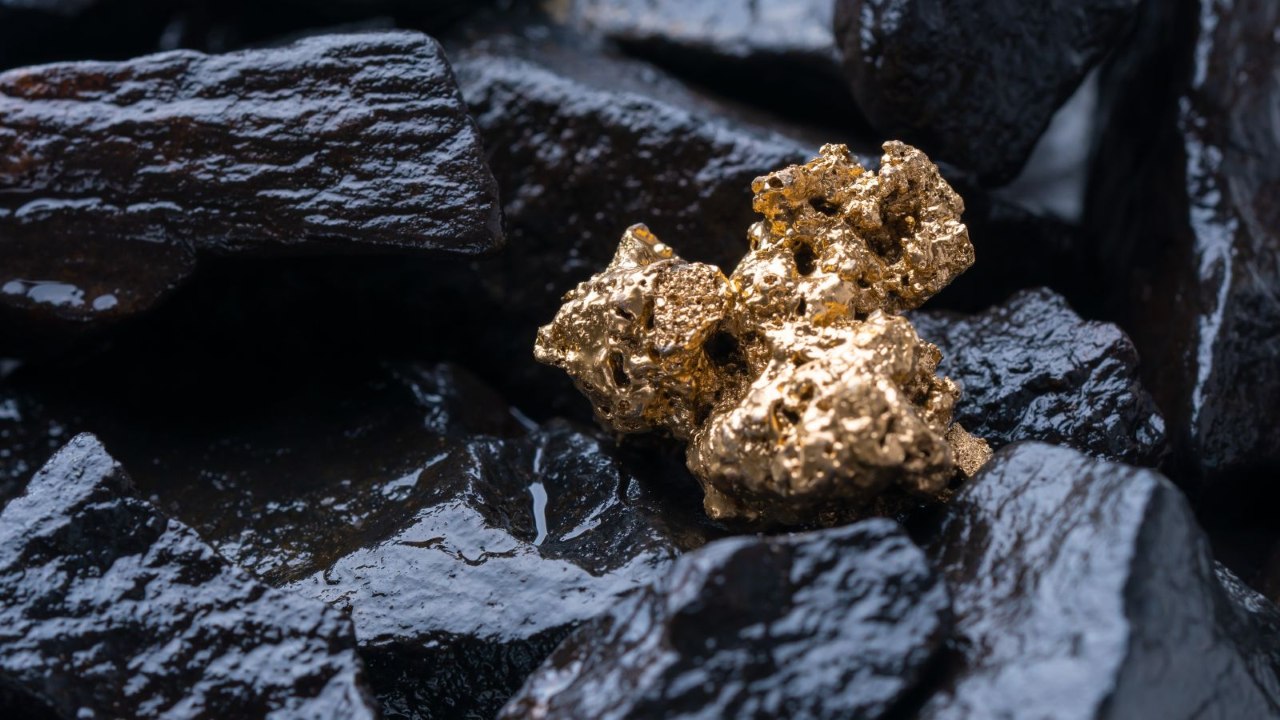
Gold has fascinated people for as long as history remembers. From royal crowns to temple offerings, from wedding jewelry to financial reserves, gold has always meant more than just a shiny metal. It represents power, purity, wealth, and permanence. Civilizations across the world have treasured it, and for centuries, alchemists searched for ways to create it artificially, believing it was the secret to eternal prosperity.
Today, the old dream of alchemy has taken a modern turn. With science advancing in remarkable ways, researchers are now able to grow gold inside laboratories. Known as lab-grown gold, this breakthrough is raising new questions: Is it real gold? Can it replace mined gold? Will it change jewelry traditions and global industries? Or will it remain a scientific curiosity?
This guide explores lab-grown gold in detail, from its chemistry to its cultural meaning, from advantages to limitations, and from market behavior to future possibilities.
What is Lab-Grown Gold?
Lab-grown gold, also called synthetic or engineered gold, is gold that is created by scientists using advanced processes in controlled laboratory conditions. Unlike natural gold, which forms in the earth over billions of years, lab-grown gold is made in weeks, days, or even hours.
Scientists have experimented with several methods:
-
Electrochemical Deposition: A process where gold ions in a solution are deposited onto a surface, building pure gold layers atom by atom.
-
Chemical Vapor Deposition (CVD): Gaseous compounds containing gold atoms are broken down under controlled heat and pressure, releasing gold atoms that form a thin film or layer.
-
Nano-engineering Approaches: Used mainly in medicine and electronics, where gold is created at microscopic levels for highly specialized purposes.
The key point is that lab-grown gold is not imitation or alloy. It is the same chemical element, Au (atomic number 79), with the same atomic structure as mined gold.
Is Lab-Grown Gold Real Gold?
Yes. Lab-grown gold is real gold. Its atomic composition is identical to natural gold. It can be refined to 24K purity (99.9%) or mixed with alloys to make 18K or 14K jewelry, just like mined gold.
Chemically and physically, there is no difference:
-
Density: 19.3 g/cm³
-
Melting point: 1064°C
-
Durability: Stable, resistant to tarnish, malleable, and ductile
-
Purity levels: 24K, 22K, 18K, 14K - same as mined gold
The main difference is not in the gold itself but in how it was formed. One comes from nature, the other from science.
Fusion Reactors, Mercury, and the Old Dream of Alchemy
The story of lab-grown gold cannot be told without the history of alchemy. For thousands of years, alchemists across India, China, and Europe dreamed of turning cheap metals like lead or mercury into gold. They believed that metals could be transformed if treated with the right secret formula.
While these ancient alchemists never succeeded, modern science has shown that their dream was not entirely impossible. Using nuclear physics, scientists in the 20th century were able to transform mercury atoms into gold. This was done by bombarding mercury with neutrons in particle accelerators, causing its atomic structure to change.
However, this process was incredibly expensive. Producing just a tiny fraction of a gram of gold in this way cost millions of dollars, far more than the market value of gold itself. In practical terms, nuclear alchemy is not feasible.
The gold that scientists grow today is not created through nuclear reactions but through chemical and deposition methods. This approach is more practical, though still costly. In many ways, lab-grown gold is the modern realization of an ancient dream is the pursuit of alchemy achieved with science.
Market Trends and Consumer Behavior
Gold remains one of the most important commodities in the world. According to the World Gold Council (2024):
-
Global mine production is around 3,500 tonnes per year.
-
Recycled gold contributes another 1,200 tonnes annually, covering about 25% of total supply.
-
Jewelry accounts for over 50% of global demand, with India and China leading purchases.
-
Central banks and investors account for nearly 30% of gold demand as a financial asset.
So where does lab-grown gold fit in? At present, its production is extremely small compared to mined and recycled gold. But the idea is gaining attention, and the closest comparison we have is lab-grown diamonds.
-
In 2015, lab-grown diamonds made up less than 1% of the diamond market.
-
By 2024, they accounted for around 15%.
-
The lab-grown diamond market is projected to reach 97.85 billion USD by 2034.
This shows that consumer acceptance of lab-grown materials can grow rapidly if costs come down and awareness rises.
Consumer Behavior
-
Millennials and Gen Z are more open to lab-grown options, as they value sustainability and ethics.
-
Luxury brands are experimenting with lab-grown materials to align with environmental values.
-
Traditional buyers, especially in India and the Middle East, still prefer mined gold for weddings, festivals, and investments because of cultural symbolism.
Challenges in the Lab-Grown Gold Sector
-
High Costs – Current processes are more expensive than mining or recycling.
-
Scalability – Producing small amounts is possible, but scaling up to tonnes is still difficult.
-
Certification – Unlike diamonds, there are no established global standards for labeling lab-grown gold.
-
Market Acceptance – Buyers are emotionally attached to natural gold. Lab-grown gold lacks cultural legitimacy.
-
Resale Value – A major concern, as there is no established resale market.
Advantages of Lab-Grown Gold
-
Chemically Identical: It is the same as mined gold.
-
Eco-Friendly Potential: No deforestation, toxic chemicals, or dangerous mining conditions.
-
Controlled Purity: Can be grown with fewer impurities.
-
Custom Production: Can be made for specific needs, such as thin coatings for electronics.
-
Innovation Friendly: Offers possibilities for industries beyond jewelry.
Disadvantages and Limitations
-
Currently more expensive than mined gold.
-
No cultural recognition in traditional ceremonies.
-
Uncertain resale market.
-
Energy-intensive processes, which may offset sustainability benefits.
-
Still in experimental stages, with limited consumer awareness.
Applications Beyond Jewelry
Lab-grown gold has potential far beyond rings and necklaces. Gold is a highly useful industrial material:
-
Electronics: Every smartphone contains about 30–50 mg of gold in connectors and microchips.
-
Medical Devices: Gold is used in pacemakers, dental crowns, and cancer treatments because it is safe and stable in the human body.
-
Aerospace: NASA uses gold coatings on spacecraft and satellites to reflect harmful radiation.
-
Nanotechnology: Gold nanoparticles are being researched for drug delivery and diagnostics in medicine.
For these industries, lab-grown gold could provide purer, tailor-made material without reliance on mining.
Lab-Grown Gold vs Natural Gold: Buyer Comparison
| Factor | Lab-Grown Gold | Natural Gold |
|---|---|---|
| Chemistry | Identical (Au) | Identical (Au) |
| Purity / Karat | Can reach 24K or alloys | Same |
| Durability | Same physical properties | Same |
| Sustainability | Potentially greener | Mining causes major ecological harm |
| Price (Upfront) | High for now | More affordable |
| Resale Value | Weak, no established market | Strong global resale market |
| Cultural Value | New, lacks tradition | Deep cultural roots |
Should You Buy Lab-Grown Gold Jewelry?
The answer depends on your priorities.
-
If you care about sustainability and innovation, lab-grown gold is a forward-looking choice.
-
If you want investment security or cultural symbolism, natural gold is still the better option.
-
For fashion jewelry, lab-grown gold offers the same shine, purity, and feel.
-
For heritage jewelry, mined gold remains irreplaceable.
Buyer Tips
-
Always ask for certification of purity and origin.
-
Check the karat value (24K, 22K, 18K, etc.) just as you would with mined gold.
-
Be aware of resale limitations.
-
Choose brands with transparency about their lab-grown process.
-
Start with smaller pieces to experience the difference before making big investments.
FAQs
Is lab-grown gold cheaper than natural gold?
Not at present. Production costs are higher, though prices may drop as technology improves.
Can jewelers tell the difference?
No. Both look, feel, and test the same. Only advanced laboratory analysis can identify origin.
Does lab-grown gold tarnish?
No. Gold does not tarnish, regardless of origin.
Can lab-grown gold be 24K?
Yes. It can be refined to 99.99% purity, just like mined gold.
Is it safe for the body?
Yes. Gold is biocompatible, making it safe for jewelry and medical uses.
Will it replace mined gold?
Not in the near future. Mined gold will remain dominant because of culture, tradition, and established markets. Lab-grown gold may grow in niche segments.
Final Words
Lab-grown gold is more than a scientific breakthrough, it is a continuation of humanity’s centuries-old dream to create gold. While it is chemically identical to mined gold, its journey in markets and cultures is just beginning.
It offers real potential for sustainability, ethics, and high-tech applications. But challenges remain in cost, resale value, and cultural acceptance.
For now, lab-grown gold should be seen as a modern choice rather than a replacement for traditional gold. Over time, as technology improves and awareness spreads, it may carve a permanent place in both jewelry and industry.
Gold will always carry meaning beyond its metal. Whether mined from the earth or grown in a lab, what matters most is the value and emotion we attach to it.
Share:
Top 10 Diamond Gift Ideas for Her This Diwali 2025
Lab-Grown Diamond Earrings for Work