
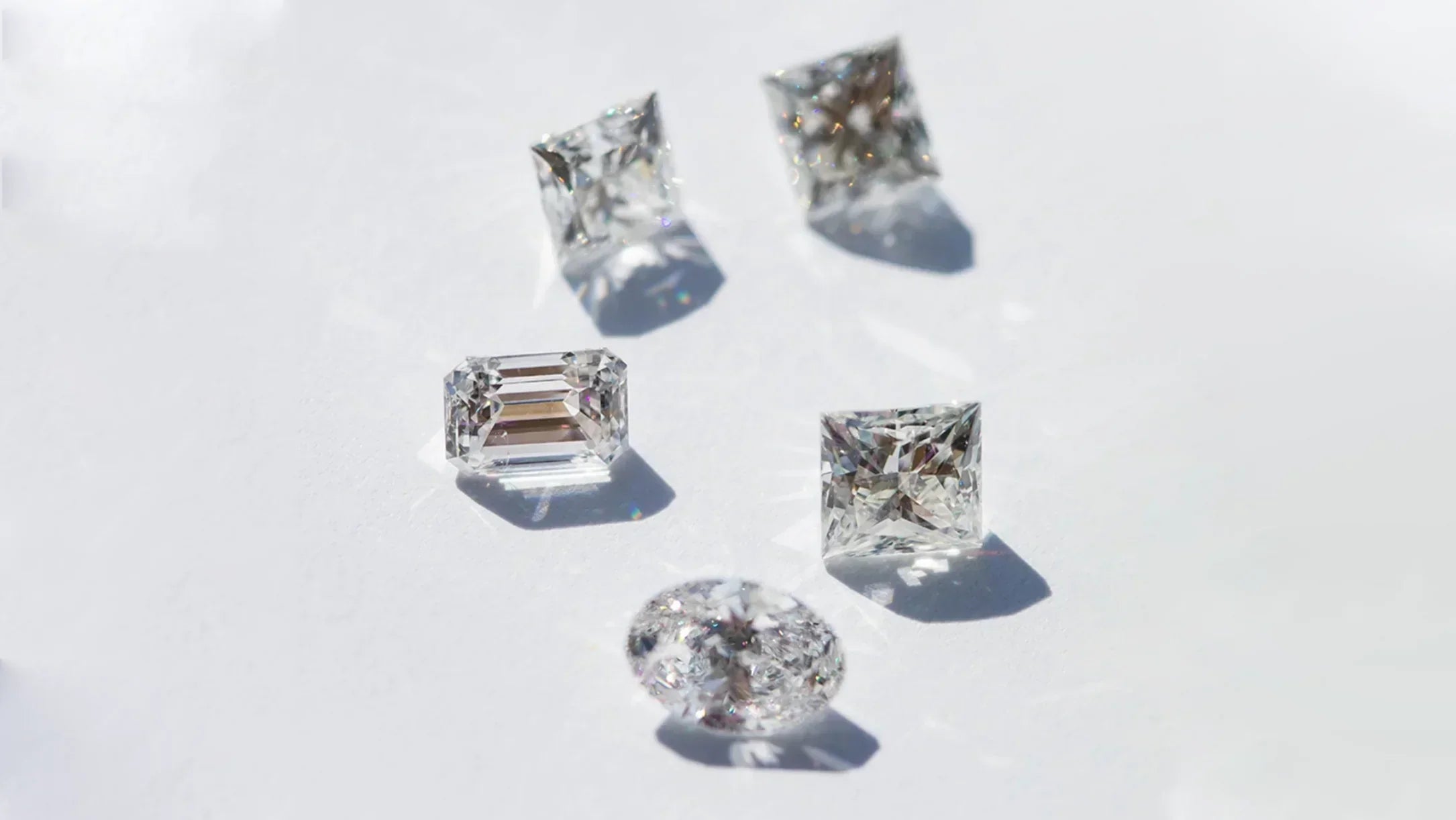
A cut is regarded as one of the most important factors in the 4Cs of a diamond. It is what gives a diamond a new life, unmatched brilliance and fire that makes the gemstone shine at its brightest. Over time, this understanding led people to refine and perfect different types of diamond cuts, each interacting with light in its own unique way.
In this blog, you will learn about the modern primary diamond cuts, the difference between diamond cut and diamond shape, as well as the heritage cuts that have stood the test of time.
We will help answer all your questions and might even make you a bit of an expert in your circle, something that could easily place you at the centre of attention. A trait, amusingly enough, diamonds are known for. And much of it is owed to the cut they are given! So, without further ado, let’s cut to the point.

What are the different types of cuts for diamonds?
There are three types of primary cuts, namely, Brilliant cut, Step cut and Mixed cut.
Brilliant Cut
Designed to give maximum radiance, a Brilliant diamond cut has small 57 to 58 facets that catch rays and reflect them in various directions. The results are repeated rainbow flashes with an impeccable shine. The classic version of a Brilliant cut is typically seen in a round cut.
Step Cut
Step cut diamonds have long, straight and architectural facets, much like steps. This diamond cut offers a glassy shine and a clean look. This is perfect for those who prefer minimalistic looks.
Where a Brilliant cut sparkles, a Step cut, on the other hand, reflects light in a smooth manner. And because of this reason, Step cut highlights the colour and clarity of a diamond the most.
Mixed Cut
A Mixed cut gives you the best of both worlds. This diamond cut is quite known for balancing sparkle and structure perfectly. Usually, the Brilliant cut sits on top and meets the Step cut at the base.
The difference between a Diamond Cut and Diamond Shape
In jewelry, the terms shape and cut are often used interchangeably. Historically, the diamond cut and the shape of the diamonds were closely linked, and this is the reason we say pear cut, heart cut, oval cut or marquise cut, despite them being shapes and not diamond cuts.
But it is quite important to know the difference between the two. The cut is all about a diamond interacting with the light, whereas the shape is the visual outline of a diamond.
At Emori, we honour this traditional language while helping you understand the distinction between how a diamond is cut and how it is shaped.
With this understanding, let’s quickly look at different diamond cuts or shapes.
What are the top 10 diamond cut shapes?
|
Round Cut (Brilliant Cut family): |
 |
|
Oval Cut (Brilliant Cut family): |
 |
|
Cushion Cut (Brilliant / Mixed Cut family): |
 |
|
Princess Cut (Brilliant Cut family): |
 |
|
Emerald Cut (Step Cut family): |
 |
|
Asscher Cut (Step Cut family): |
 |
|
Pear Cut (Brilliant Cut family): |
 |
|
Marquise Cut (Brilliant Cut family): |
 |

|
Radiant Cut (Mixed Cut family): |
 |
Beyond the Modern Core Cuts
Before Brilliant, Step and Mixed cut, there were rose cut, single cut and old mine cut.
Rose cut diamond
With a softly domed top and soft open base, the rose cut is made of small triangular facets that, instead of sharp brilliance, render a diamond, romantic candlelight glow. The outcome is not intense but rather intimate, and if a soft look is what you are after, then a customised rose cut diamond is what you should be going for.
Single-cut diamond
A single cut diamond is a minimal facet cut, meaning this cut has larger and chunkier facets; while a full cut diamond has 57-58 facets, a single cut, on the other side, has 17-18 facets, giving off a delicate shimmer. This type of diamond cut is usually used in pavé to enhance intricate jewelry.
Old Mine Cut
Designed in an era before advanced cutting technology, the old mine cut, one can argue, is more about character than symmetry. With its hand-cut facets, this diamond cut exudes flickering brilliance and charm of the older times.
The style had been famous from the period of the 1700s to the late 1800s; however, it had been making a comeback in recent times, most notably in Taylor Swift’s antique-inspired old mine cut engagement ring!
At Emori, we bring you a thoughtfully and carefully curated collection that promises and delivers quality, which speaks for itself. Browse our range, and you will find yourself scrolling and lingering for a little longer.
And if you have a design in mind, then we’re here to bring it to life. Share your vision with us, and we’ll surely transform it into a piece that feels uniquely yours.
With us, you don’t simply indulge, you make an informed choice, guided by sustainability, clarity and confidence.
FAQs
-
Which diamond cut looks the biggest?
-
Shapes like oval, marquise, and pear cuts tend to look larger than other shapes of the same carat weight.
-
Which diamond cut is best for everyday wear?
-
Round, oval, and cushion cuts are great for everyday wear because their shapes are smooth and less prone to chipping.
-
Which diamond cut hides imperfections best?
-
Brilliant cuts tend to hide inclusions better because their shine makes flaws less noticeable.
-
Can I customise a diamond cut at Emori?
-
Yes, at Emori, you can share your design idea and create a customised piece that reflects your personal style. Choose cut, decide the shape, and we will turn your idea into a reality.
Share:
Lab Grown vs. Natural Diamonds: Are They Different?
Cluster vs Solitaire Diamond: What's the Difference?