

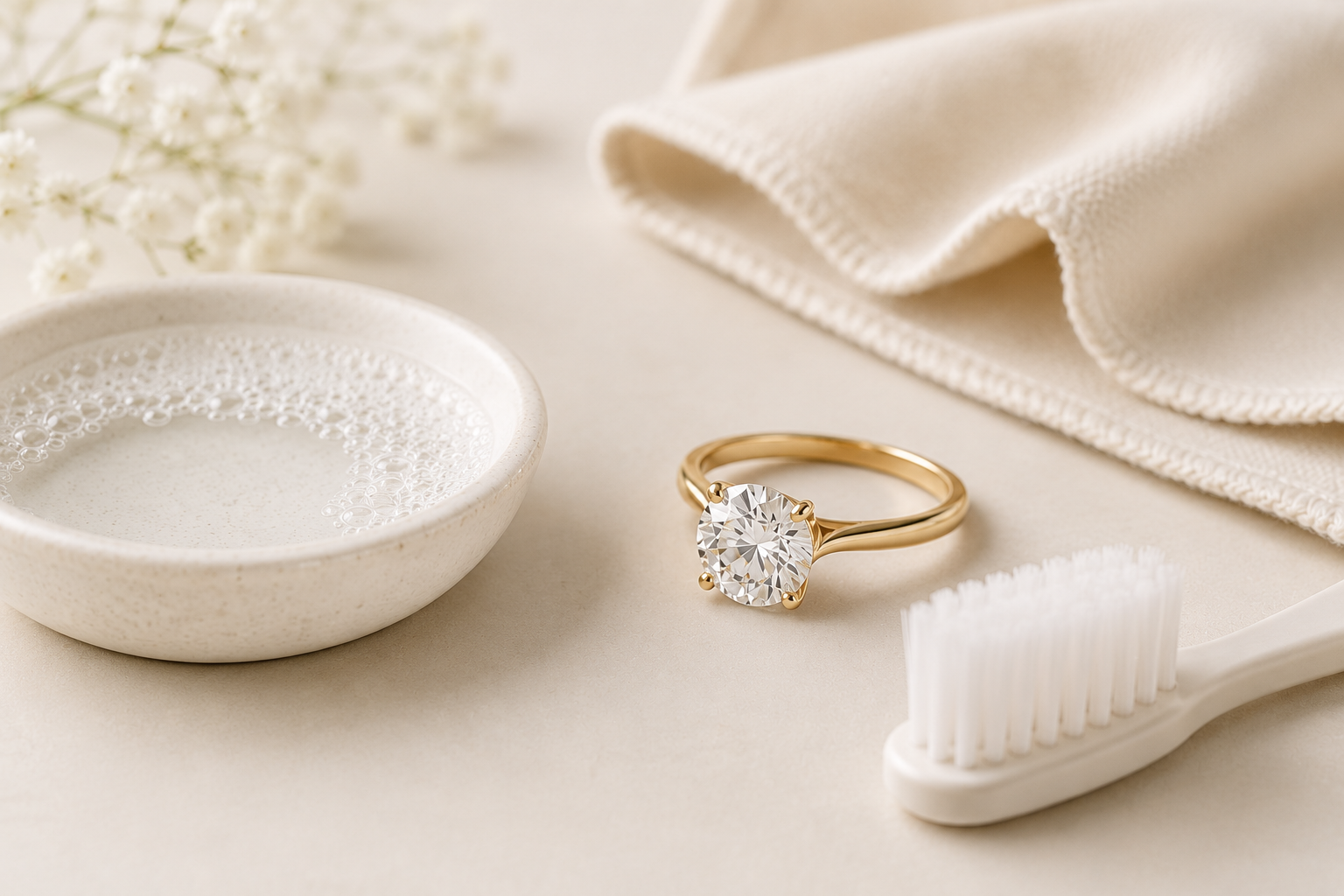
A diamond ring is designed to sparkle, but over time, even the most brilliant diamond can start looking dull. Many people assume the diamond itself has lost its shine. In reality, diamonds do not become cloudy or lose their brilliance. What changes is the layer of everyday residue that builds up on the surface and underneath the setting.
Think about everything your ring comes into contact with during the day: hand creams, sunscreen, soap, cooking oils, dust, makeup, and even natural skin oils. These substances gradually create a thin film over the diamond, preventing light from entering and reflecting properly. As a result, the ring looks less bright, even though the diamond itself remains unchanged.
The good news is that most diamond rings can be safely cleaned at home using a few simple household items. However, using the wrong cleaning methods can damage the metal, loosen settings, or reduce the lifespan of the ring. That's why it is important to understand not only how to clean a diamond ring at home, but also why certain techniques work and which mistakes should be avoided.
In this guide, we'll walk through the safest way to clean a diamond ring at home, explain what causes diamonds to lose their sparkle, and share expert tips to help keep your ring looking its best for years to come.
Why Diamond Rings Lose Their Sparkle Over Time
One of the biggest misconceptions about diamonds is that they become dull with age. In reality, a diamond does not lose its brilliance, fire, or sparkle over time. Diamonds are the hardest natural material on Earth, ranking 10 on the Mohs hardness scale, which means their ability to reflect light remains unchanged for decades.
So why does a diamond ring sometimes look cloudy or less brilliant than when it was new?
The answer is usually everyday buildup.
Throughout the day, your ring comes into contact with hand creams, lotions, sunscreen, soap residue, cooking oils, dust, makeup, and natural skin oils. Over time, these substances form a thin film on the surface of the diamond and around the setting. This buildup blocks light from entering and reflecting through the diamond properly, making it appear dull even though the stone itself remains unchanged.
Common Reasons Diamond Rings Lose Their Sparkle
1. Hand Creams and Lotions
Moisturisers and hand creams leave behind a residue that can quickly build up on the surface of a diamond, reducing its brilliance.
2. Soap and Detergent Buildup
While soap helps clean your hands, it can leave a thin film on both the diamond and the metal setting if not rinsed away completely.
3. Natural Skin Oils
The oils naturally produced by your skin are one of the most common causes of a diamond looking less bright, especially for rings worn every day.
4. Dirt Under the Setting
Many people clean the top of the diamond but forget about the underside. Dirt and residue often collect beneath the stone and around the prongs, where they are less visible but have a significant impact on sparkle.
5. Makeup, Perfume, and Hair Products
Beauty products can create a layer of buildup that gradually affects how light interacts with the diamond.
Why Regular Cleaning Matters
A diamond's sparkle comes from its ability to capture, reflect, and disperse light. Even a small amount of residue can interfere with this process. Regular cleaning not only restores brilliance but also gives you the opportunity to inspect the setting, prongs, and overall condition of the ring before small issues become bigger problems.
Understanding what causes a diamond ring to lose its sparkle is the first step. Next, let's look at the safest way to clean a diamond ring at home using items you likely already have.
How to Clean a Diamond Ring at Home: Step-by-Step
The safest way to clean a diamond ring at home is surprisingly simple. You do not need expensive cleaning solutions or specialised equipment. In most cases, warm water, mild dish soap, and a soft brush are enough to remove the buildup that prevents a diamond from sparkling at its best.
Step 1: Prepare a Gentle Cleaning Solution
Fill a small bowl with warm (not hot) water and add a few drops of mild dish soap. Avoid harsh cleaners, bleach, chlorine, or abrasive household products, as these can damage the metal setting over time.
Allow the ring to soak for 15 to 20 minutes. This helps loosen oils, soap residue, and dirt trapped around the diamond and underneath the setting.
Step 2: Gently Brush the Diamond and Setting
Using a soft-bristled toothbrush, gently clean the ring, paying particular attention to areas where buildup commonly collects:
- Underneath the diamond
- Around the prongs
- Along the gallery rail
- Inside intricate settings
One thing jewellers often notice is that most dirt accumulates beneath the stone rather than on top of it. Taking a little extra time to clean these hidden areas can make a noticeable difference in the ring's sparkle.
Step 3: Rinse Thoroughly
Rinse the ring under lukewarm running water to remove any remaining soap or loosened debris.
Before rinsing, always close the sink drain or use a bowl to prevent accidental loss.
Step 4: Dry with a Soft Lint-Free Cloth
Pat the ring dry using a microfiber or lint-free jewellery cloth. Avoid paper towels or tissues, as they can leave fibres behind and may create tiny scratches on some metals over time.
Step 5: Inspect the Ring
Once clean, take a moment to inspect the ring.
Look for:
- Loose stones
- Bent prongs
- Worn settings
- Areas that still appear cloudy
If the diamond remains dull after cleaning, the issue may be residue trapped beneath the setting or a maintenance concern that requires professional attention.
Expert Tip
If you wear your diamond ring every day, a quick cleaning every one to two weeks can help prevent heavy buildup from developing in the first place. Regular light cleaning is often more effective than waiting until the ring looks noticeably dull.
Common Mistakes to Avoid When Cleaning a Diamond Ring
Cleaning a diamond ring at home is simple, but using the wrong methods can do more harm than good. Over the years, jewellers have seen everything from scratched gold bands to loose stones caused by well-intentioned DIY cleaning methods. Whether you own a solitaire engagement ring or one of the many modern lab grown diamond rings, avoiding these common mistakes will help protect both the diamond and its setting.
Using Toothpaste to Clean a Diamond Ring
Toothpaste is often recommended as a home cleaning hack, but it is far too abrasive for fine jewellery. While it may not damage the diamond itself, it can create micro-scratches on gold and other precious metals, gradually affecting the ring's finish.
Cleaning with Bleach or Harsh Chemicals
Products containing bleach, chlorine, or strong household chemicals should never be used on diamond rings. These chemicals can weaken metal settings over time and may damage certain gemstones used alongside diamonds.
Using Hard-Bristled Brushes
A soft toothbrush is ideal for cleaning jewellery. Hard-bristled brushes can scratch metal surfaces and may put unnecessary pressure on delicate settings and prongs.
Forgetting to Clean Under the Diamond
One of the most common mistakes is focusing only on the visible part of the diamond. In reality, much of the dirt, lotion, and oil buildup accumulates underneath the stone, where it is harder to see but has the greatest impact on sparkle.
Rinsing a Ring Over an Open Drain
It sounds obvious, but jewellers hear this story more often than you would think. Always close the sink drain or use a bowl while rinsing your ring to avoid an expensive accident.
Ignoring Loose Prongs or Settings
If a diamond feels loose or the prongs appear worn, cleaning should not be the first priority. Continued brushing or handling can sometimes worsen the issue. In these cases, it is best to have the ring inspected before attempting a deep clean.
Overusing Ultrasonic Cleaners
Ultrasonic cleaners can be effective, but they are not suitable for every ring. Rings with loose stones, pavé settings, or additional gemstones may require extra caution. When in doubt, manual cleaning remains the safest option.
If you wear your ring every day, a quick clean every one to two weeks is usually enough to maintain its sparkle. This applies equally to mined diamonds and lab grown diamond rings, as both attract the same oils, lotions, and everyday residue that can reduce brilliance over time.
How Often Should You Clean a Diamond Ring?
If you're wondering how to clean a diamond ring at home and how often you should do it, the answer depends on how frequently the ring is worn. Regular cleaning prevents oils, lotions, soap residue, and everyday dirt from building up and reducing the diamond's sparkle.
- Everyday rings: Clean every 1–2 weeks.
- Engagement rings: A weekly clean helps maintain maximum brilliance.
- Occasion wear rings: Clean before and after use.
- Halo and pavé rings: These settings collect more dirt and may require more frequent cleaning than solitaire rings.
While learning how to clean a diamond ring at home is important for regular maintenance, a professional inspection once or twice a year can help identify loose stones, worn prongs, or hidden buildup that may not be visible during routine cleaning.
The best approach to how to clean a diamond ring at home is consistency. A quick clean every couple of weeks is far more effective than waiting until the ring starts looking noticeably dull. Whether you own a solitaire, halo, or an important engagement ring, regular care will help keep it looking brilliant for years to come.
Can You Use Household Products to Clean a Diamond Ring?
Many home cleaning hacks recommend using toothpaste, vinegar, baking soda, or other household products. While some of these methods may appear effective initially, they can sometimes damage the metal setting or leave residue behind. If you're learning how to clean a diamond ring at home, it is important to know which products are safe and which should be avoided.
Can You Use Toothpaste?
No. Toothpaste contains mild abrasives designed to clean teeth, not fine jewellery. While it won't damage the diamond itself, it can create tiny scratches on gold and other precious metals over time.
Can You Use Vinegar?
Plain white vinegar is generally safe for diamonds, but it is not always recommended for jewellery containing gemstones, plated metals, or delicate settings. A mild soap solution remains the safer option.
Can You Use Baking Soda?
It is best to avoid baking soda. Its abrasive texture can scratch gold settings and affect the finish of your ring if used repeatedly.
Can You Use Dish Soap?
Yes. Warm water mixed with a few drops of mild dish soap is one of the safest and most effective methods for cleaning a diamond ring at home. It removes oils, lotions, and everyday residue without damaging the diamond or metal.
What Do Jewellers Recommend?
Most professional jewellers recommend sticking to a simple combination of warm water, mild dish soap, and a soft-bristled toothbrush. When people ask how to clean a diamond ring, this remains the safest and most widely accepted method for regular at-home maintenance.
Knowing how to clean a diamond ring at home is one of the simplest ways to maintain its beauty and sparkle. In most cases, a gentle cleaning routine using warm water, mild dish soap, and a soft brush is all it takes to remove everyday buildup and restore brilliance. The key is consistency. Regular cleaning, avoiding harsh chemicals, and paying attention to the condition of the setting will help keep your ring looking its best for years.
Share:
How to Choose the Right Ring Design for Men (Without Overthinking It !)
What Is the Best Diamond Ring to Buy With Rs. 50,000?