

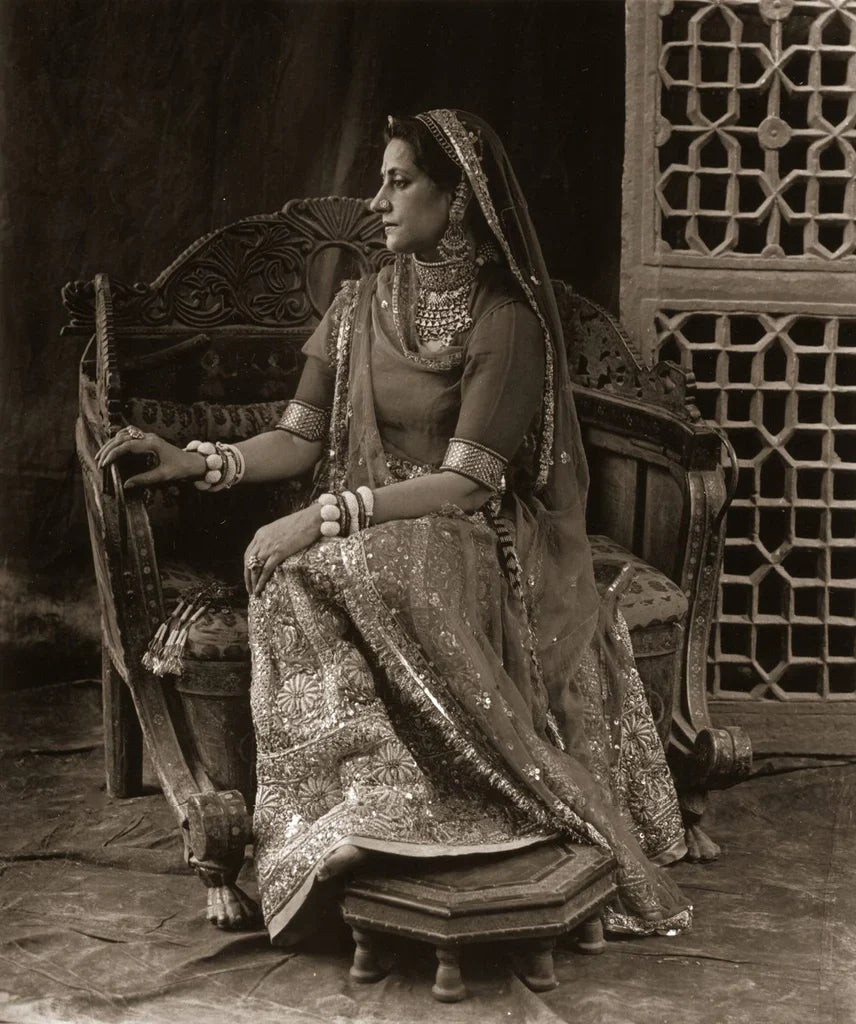
There was a time when India’s palaces sparkled not just with chandeliers and silk drapes, but with women whose beauty and confidence defined an era. These were the Maharanis, women of strength, intelligence, and style, who turned diamonds into something far more powerful than ornaments.
For them, jewellery was not only about wealth. It was about presence. It was how they expressed who they were, how they ruled, and how they carried themselves before the world. Every necklace, every choker, every tiara had a story of heritage, artistry, and pride.
Let’s take a dive into the lives of India’s most iconic Maharanis and their enduring love for jewels that defined generations.
Maharani Gayatri Devi of Jaipur
Often described as one of the most beautiful women of the 20th century, Maharani Gayatri Devi of Jaipur was a true symbol of royal grace. Known for her refined sense of style, she preferred jewellery that highlighted her natural beauty rather than overpowering it.
Her collection included diamond chokers, pearl strands, and a few elegant pieces specially made by Cartier. Photographs of her attending gatherings in Europe, often dressed in chiffon saris paired with delicate diamond necklaces, made her a timeless icon.
Gayatri Devi’s approach to jewellery was simple and graceful. She believed that diamonds should enhance a woman’s personality, not outshine it. Her sense of balance brought Indian royalty into the international spotlight and showed how modern women could blend tradition with quiet confidence.
Rani Sita Devi of Kapurthala
If Gayatri Devi was known for her grace, Rani Sita Devi of Kapurthala represented glamour. She was known as “The Pearl of India” in Western society and captivated everyone with her beautiful looks and extravagant jewellery.
Rani Sita Devi was one of the first Indian royal women to work directly with European jewellers like Cartier and Van Cleef & Arpels. Her collection included diamond-studded tiaras, ornate emerald necklaces, and statement bracelets inspired by Indian motifs but made in Parisian ateliers.
She often mixed traditional Indian pieces with Western evening gowns, a style that was revolutionary in her time. Through her, the West saw the magnificence of Indian royal jewellery not as old relics but as modern fashion statements.
Maharani Indira Devi of Cooch Behar
A true trailblazer, Maharani Indira Devi was one of the first Indian queens to embrace European style without losing her royal Indian identity. Her jewels symbolized both her independence and her impeccable taste.
She often wore diamond collars, long pearl strands, and tiaras designed in France. Many of her pieces were custom-created to match her modern wardrobe of chiffon saris and couture gowns. She loved diamonds, but she also valued craftsmanship, often commissioning Indian artisans to restore and refit older royal gems.
Indira Devi’s refined sense of style was later inherited by her daughter, Gayatri Devi, linking two generations of royal women who balanced elegance and evolution.
Maharani Sita Devi of Baroda
Another legendary figure was Maharani Sita Devi of Baroda, whose beauty turned her into an international sensation. Her collection was among the richest in the world, including the famous Star of the South Diamond and the English Dresden, both mounted in exquisite necklaces.
Her jewellery box contained diamond-studded bangles, enormous emeralds, and pieces crafted by Van Cleef & Arpels and Boucheron. But beyond her wealth, she was admired for her confidence. Sita Devi represented a new kind of royal woman who owned her luxury with pride and made it part of her personal identity.
Her public appearances at European galas and events showcased Indian diamonds in the most glamorous light. Through her, the world rediscovered India’s mastery over gemstones.
Maharani Yashoda Devi of Patiala
The Patiala royal family is famous for its grand diamond heritage. While Maharaja Bhupinder Singh was known for his monumental Cartier commissions, Maharani Yashoda Devi brought elegance and femininity to those jewels.
The Patiala Necklace, is one of the most spectacular diamond necklaces ever created, symbolizing the royal house’s magnificence. Comprising thousands of diamonds including the legendary yellow De Beers stone, it became the ultimate statement of Indian royalty.
Maharani Yashoda Devi’s portraits often show her wearing multi-layered diamond and pearl sets, symbolizing power balanced with refinement. The Patiala collection remains one of the greatest examples of royal diamond patronage in history.
Maharani Chimnabai II of Baroda
Before Sita Devi, there was Maharani Chimnabai II, a progressive and cultured queen who ruled during the late 19th and early 20th centuries. She had a deep appreciation for art and craftsmanship, and her jewellery reflected her regal taste.
Her collection featured heavy diamond necklaces, tiaras, and belts studded with precious stones. The Baroda treasury under her reign was home to some of the most celebrated diamonds, including the famous Baroda Pearls and rare emerald suites.
She wore her jewels with pride during state visits and public ceremonies, projecting the image of a strong Indian queen. Her influence shaped Baroda’s reputation as one of India’s most elegant royal courts.
Maharani Suniti Devi of Cooch Behar
Mother of Indira Devi, Maharani Suniti Devi was one of India’s first global female figures of royalty. Educated and forward-thinking, she combined intellectual brilliance with a love for grand jewellery.
She owned exquisite diamond tiaras, long necklaces, and gem-encrusted ornaments that reflected both Mughal-inspired artistry and Victorian design. Her portraits reveal a queen who saw jewellery as more than decoration, but as a statement of identity and dignity.
Suniti Devi’s legacy influenced how future generations of Indian women viewed jewellery, not only as wealth but as a reflection of confidence and leadership.
Maharani of Nawanagar and the “Eye of the Tiger”
The princely state of Nawanagar was home to one of the most spectacular jewels in history, the Eye of the Tiger Diamond. Though originally commissioned by the Maharaja, it was the Maharani who wore it with unmatched poise.
The diamond cut by Cartier, was a 61-carat yellow diamond placed at the center of a grand necklace surrounded by white diamonds. The Maharani of Nawanagar wore it during royal receptions and state ceremonies, making it one of the most photographed royal jewels of the era.
Her confident and regal bearing turned the necklace into a global symbol of Indian royalty’s splendor.
A Legacy of Elegance and Empowerment
For the Indian Maharanis, jewellery was more than royal ornamentation. It was a language of strength and identity. Each choker, necklace, and tiara symbolized more than luxury, it represented power, confidence, and presence.
Their crowns were not just symbols of rule but of responsibility. Their diamond chokers and multi-strand necklaces spoke of individuality. Through their choices, they taught the world that beauty could coexist with authority and that elegance could empower.
The legacy of these women continues to influence the way Indian jewellery is designed and worn today. Every piece inspired by them carries a sense of pride, purpose, and heritage.
The Legacy of Royal Indian Jewellery
The Indian Maharanis were not just wearers of diamonds; they were curators of heritage. They preserved centuries-old jewellery traditions while opening doors to global influence. Their taste defined eras, their portraits immortalized style, and their collections inspired designers around the world.
The jewels they wore, whether crafted by Cartier, Boucheron, or Indian artisans, continue to influence modern jewellery design. Contemporary collections often echo their layered necklaces, uncut diamond sets, and signature use of color and proportion.
Final Thoughts
From Gayatri Devi’s grace to Sita Devi’s glamour, and from the Baroda treasury to the Patiala necklace, the Indian Maharanis transformed diamond jewellery into symbols of both beauty and power. Their love for diamonds was not only about adornment but about expression, identity, and legacy.
Today, their influence can still be seen in fine jewellery houses and heritage-inspired designs. Through their timeless vision, Indian Maharanis truly shaped the world’s understanding of diamond glamour.
Share:
Lab-Grown Diamond Earrings for Work
Shop Gold and Diamond Jewellery on Dhanteras