

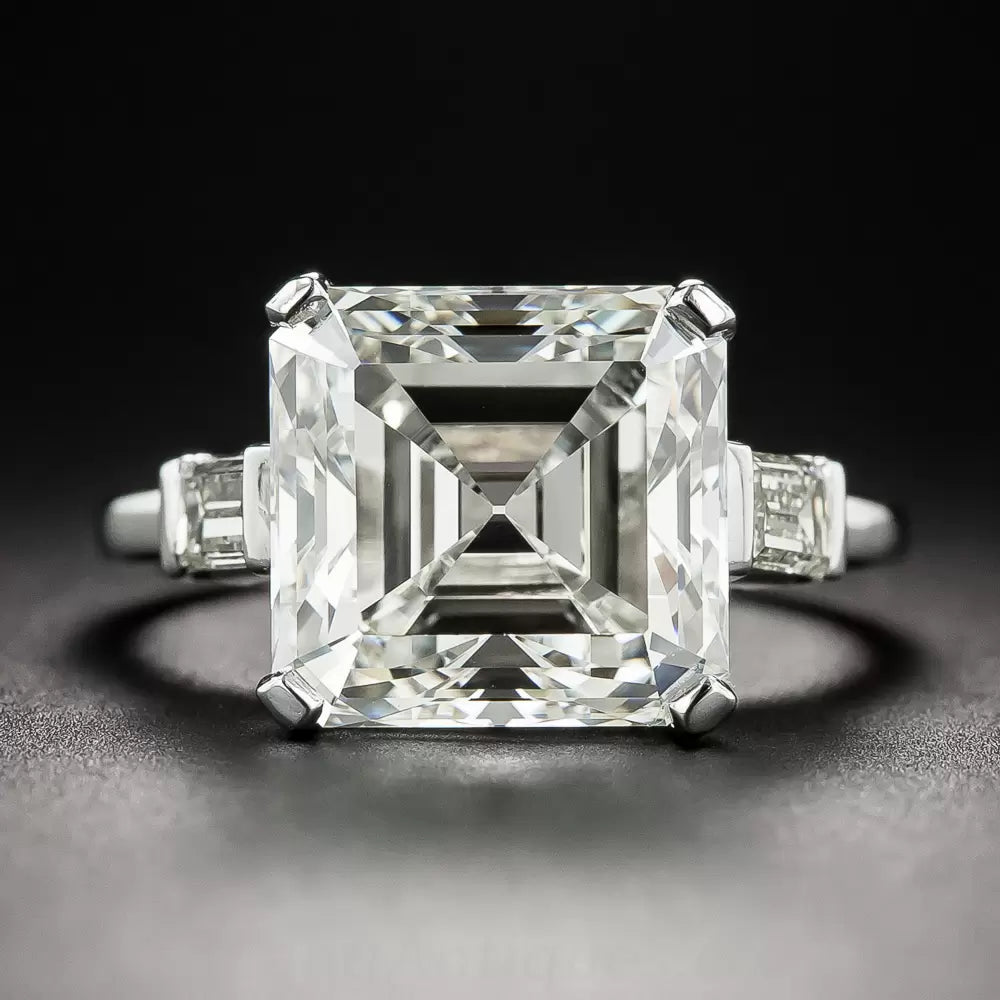
There’s something quietly powerful about an Asscher cut diamond. It doesn’t try to steal the spotlight with intense sparkle, but it draws you in with its depth, symmetry, and clean, structured beauty. With its square shape, cropped corners, and step-cut facets that resemble a staircase of light, the Asscher cut offers a vintage charm that feels distinct even today. Whether you're curious about its origins or wondering how it compares to other cuts, this guide covers everything that makes the Asscher cut a standout choice for those who appreciate detail and timeless design.
What Is an Asscher Cut Diamond?
An Asscher cut diamond is a square-shaped diamond with deeply layered facets that give it a hall-of-mirrors effect. It has a unique type of brilliance that’s less sparkly and more “glassy” compared to a round brilliant cut. The step-cut style means its facets are arranged in straight lines, almost like steps on a staircase, drawing your eye right into the center of the stone.
A Brief History of the Asscher Cut

The Asscher cut was first created in 1902 by Joseph Asscher, a diamond cutter from Amsterdam. His family owned the Royal Asscher Diamond Company, and they became famous for cutting some of the world’s most iconic diamonds. The cut became very popular in the 1920s during the Art Deco era, thanks to its geometric lines and vintage flair. Today, the Asscher cut is still beloved by those who appreciate classic beauty with a touch of old-world charm.
What Makes the Asscher Cut Unique?
The first thing people notice about Asscher cut diamonds is their symmetry. A well-cut Asscher diamond has an almost hypnotic quality because of the way the facets draw you inward. While it doesn’t sparkle as much as a brilliant cut, it shines with a deep, elegant glow that’s just as beautiful.
It also has cropped corners, which make it look like an octagon when viewed from above. This gives it a soft yet structured feel that suits both modern and vintage settings.
Sparkle and Clarit
Because of its step-cut design, an Asscher cut doesn’t hide inclusions as well as other cuts. That means clarity is especially important. You’ll want a stone with fewer visible flaws, as the open structure can make imperfections easier to see.
On the plus side, when you get a high-clarity Asscher diamond, the effect is stunning. It reflects light in big, bold flashes rather than tiny sparkles, creating a dramatic and elegant look.
Ideal Proportions
A true Asscher cut diamond is square, but some people prefer slightly rectangular versions. The best length-to-width ratio is close to 1.00, which gives it a balanced, symmetrical appearance. It’s also a good idea to look for a high crown and deep pavilion. These details bring out the stone’s unique depth and brilliance.
Popular Settings for Asscher Cut Diamonds
Asscher cut diamonds are incredibly versatile when it comes to settings. Some of the most loved styles include:
-
Solitaire setting – Lets the shape and symmetry of the stone take center stage.
-
Halo setting – Surrounds the diamond with smaller stones, giving it a bigger, brighter appearance.
-
Vintage-inspired setting – Pairs perfectly with milgrain details or filigree work to enhance the antique vibe.
-
Three-stone setting – Offers extra sparkle and symbolism, often used to represent the past, present, and future.
-
Asscher cuts also work beautifully in stackable rings and art deco-style designs, making them great for people who love to mix old and new.
Asscher Cut vs. Emerald Cut
Both the Asscher and emerald cuts are step-cut styles, but they have some differences. The Asscher is square with a deeper pavilion, while the emerald is rectangular with a more elongated shape. If you like more symmetry and a “window-like” sparkle, go for the Asscher. If you prefer a sleek, stretched-out look, the emerald might be a better match.
Pros and Cons of Asscher Cut Diamonds
Pros:
-
Elegant, vintage appeal
-
Unique step-cut brilliance
-
Symmetrical and clean design
-
Great for those who prefer subtle shine over sparkle
Cons:
-
Shows inclusions more easily
-
Appears smaller than round diamonds of the same carat weight
-
Not as sparkly as brilliant cuts
Famous Fans of the Asscher Cut
Many celebrities have chosen Asscher cut diamonds for their engagement rings, bringing the vintage shape back into the spotlight. Elizabeth Taylor famously wore a massive Asscher-cut diamond. More recently, stars like Zooey Deschanel and Jessica Alba have been seen with this unique cut, showing that its timeless style still appeals to modern tastes.
Is the Asscher Cut Right for You?
If you're someone who values elegance, structure, and a vintage-inspired aesthetic, the Asscher cut could be a perfect fit. It’s especially popular among people who want something a little different from the usual round or princess-cut diamond. Whether you’re drawn to its history or simply love its clean lines, this diamond cut offers a classic look that will never go out of style.
Explore Asscher Cut Lab Grown Diamond Rings at Emori
At Emori, we believe every diamond should tell a story. Our Asscher cut lab-grown diamond rings combine heritage-inspired design with modern craftsmanship. Explore our exclusive collection to find a ring that reflects your unique taste, whether you’re shopping for an engagement or just something timeless for yourself.
Share:
1 Carat Solitaire Stud Earrings Designs from Emori
Diamond Shape vs. Diamond Cut | What’s the Difference?